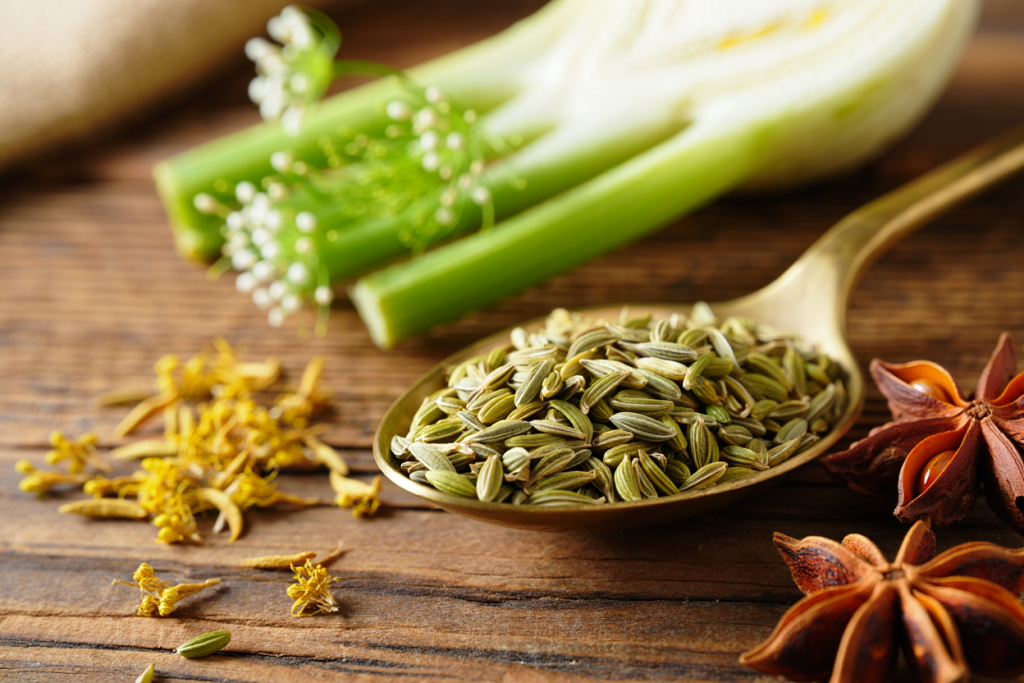
Fennel seeds are the dried fruits of the fennel plant (Foeniculum vulgare), a Mediterranean herb known since antiquity for its aromatic, licorice-like flavor. The umbrella-shaped flower clusters of the fennel plant produce these small, oblong seeds, which are straw-colored and richly scented. Cultivated worldwide, fennel seeds are used as a spice and herbal remedy across many cuisines. In this article, we explore the fennel seeds nutrition profile, fennel seeds benefits (for digestion, bloating relief, weight management, women’s health, etc.), culinary uses, and important precautions. By the end, you’ll understand why this ancient spice remains valuable in modern cooking and wellness.
What Are Fennel Seeds?
Fennel (Foeniculum vulgare) is a perennial herb in the carrot family, valued for its feathery leaves, crunchy white bulb, and umbrella-shaped yellow flower heads. Each flower head eventually produces many tiny seeds. These fennel seeds have a sweet, anise-like (licorice) flavor and fragrance. In the kitchen, the seeds are used whole or ground to season soups, stews, breads, vegetables and teas worldwide. Medicinally, cultures from India to Europe have long chewed fennel seeds after meals as a breath freshener and digestive aid. Today, both the seeds and the bulb are recognized as nutritious foods: Healthline notes “the flavorful…seeds of the fennel plant are nutritious and may offer some health benefits”.
Fennel Seeds Nutrition
Fennel seeds pack a lot of nutrition into a small package. Per 100 grams, they provide roughly 345 calories, 15.8 g protein and 52.3 g carbohydrates. Remarkably, most of those carbs are fiber: about 39.8 g of dietary fiber per 100 g (nearly 105% of the daily value). This high fiber content helps regulate digestion and blood sugar. The seeds are also rich in minerals: 100 g contains ~1694 mg potassium (36% DV), 1196 mg calcium (over 100% DV), and 18.5 mg iron (over 100% DV). Other minerals like magnesium, copper, manganese and zinc are abundant as well.
Fennel seeds supply vitamins too notably vitamin C (21 mg, about 35% DV) and modest B-vitamins plus small amounts of vitamin A and E. In short, fennel seeds nutrition is characterized by very high fiber and generous amounts of minerals and antioxidants, making them a nutrient-dense spice that supports overall health.
Health Benefits of Fennel Seeds:
Thanks to their rich nutrient and phytonutrient profile, fennel seeds offer numerous health benefits. Research and traditional use point to improvements in digestion, heart health, women’s health and more. Key fennel seeds benefits include:
- Digestion & Bloating Relief: Fennel seeds have natural antispasmodic and carminative properties. The volatile oils (especially anethole, estragole, fenchone) in fennel relax intestinal muscles and reduce gas. Traditionally, fennel seeds are used as a digestive aid in many cultures. A 2022 animal study found that fennel extract protected against gastrointestinal inflammation. In practice, chewing fennel seeds or drinking fennel tea can ease indigestion, constipation and bloating.
- Weight Management: The high fiber in fennel seeds helps increase satiety. Studies show fiber-rich foods keep you fuller longer and reduce overeating. Fennel’s diuretic and metabolism-boosting effects may also aid fat loss. For instance, an NDTV report notes that fennel seeds “kick-start your metabolism” and contain antioxidants that combat oxidative stress linked to obesity. Drinking fennel seed water or tea is a popular weight-loss practice. Simply soaking 1–2 teaspoons of fennel seeds in water overnight and sipping it in the morning can help flush toxins and curb appetite. Similarly, making a warm fennel tea (steeping a teaspoon of crushed seeds) is a soothing, calorie-free way to promote digestion and weight control. Tip: Combine fennel tea with a balanced diet and exercise for best results.
- Women’s Health: Fennel contains phytoestrogens (plant compounds that mimic estrogen) like anethole, which can support women’s hormonal health. Several studies and anecdotes suggest fennel may ease menstrual discomfort. For example, research indicates fennel seed extract can reduce menstrual cramps and pain in some women. The same estragole/anethole compounds are believed to stimulate prolactin, the milk-production hormone. As a result, fennel has been traditionally used as a galactagogue to help nursing mothers increase breast milk supply. Other reported benefits include relief from menopausal hot flashes (some small trials) and even reducing PMS-related bloating. (However, pregnant women should consult a doctor before using fennel supplements, as discussed below.)
- Heart Health and Blood Pressure: Fennel seeds are high in fiber and potassium. A high-fiber diet can help lower cholesterol levels and reduce heart disease risk. Potassium helps balance blood pressure by counteracting sodium. Studies note that diets rich in fiber and potassium (like fennel) support heart function and may lower hypertension. Additionally, fennel contains magnesium and folate, which further benefit cardiovascular health.
- Antioxidant & Anti-Inflammatory: Fennel seeds contain antioxidants such as vitamin C, flavonoids (kaempferol, quercetin), and phenolic compounds. These neutralize free radicals, reducing inflammation and protecting cells. In concentrated forms (like fennel seed extract), these compounds have been shown to calm inflammation. Habitual use of fennel as part of a balanced diet may thus help lower chronic inflammation associated with diseases like arthritis or metabolic syndrome.
- Respiratory and Antimicrobial: Fennel’s aromatic oils give it mild expectorant and antibacterial properties. The seeds have been used traditionally to relieve coughs, asthma and bronchitis. Modern lab studies find fennel extracts can inhibit growth of certain harmful bacteria and fungi, suggesting a natural antimicrobial effect. Even simply drinking fennel tea can help clear sinuses and freshen breath.
- Oral Health: Chewing fennel seeds after a meal is a common practice in India and the Middle East (mukhwas). The fresh, sweet oil in fennel helps neutralize bad breath and bacteria in the mouth.
- Skin and Eye Health: Though less well-studied, fennel’s antioxidants and vitamin A/C content support skin repair and eye health. Traditionally, fennel has been applied in remedies for acne and eye problems. The vitamin C in fennel seeds contributes to collagen formation for healthy skin, while vitamin A supports vision.
Overall, the benefits of fennel seeds are wide-ranging. Their blend of fiber, vitamins, minerals and phytonutrients makes them a multifaceted medicinal spice. The table below summarizes some key nutrients in fennel seeds and their roles:
- Dietary Fiber: ~40 g per 100g (125% DV). Aids digestion, cholesterol management.
- Iron: 18.5 mg per 100g (over 100% DV). Important for blood health.
- Calcium: 1196 mg per 100g (over 100% DV). Supports bones and muscle function.
- Potassium: 1694 mg per 100g. Regulates blood pressure and fluids.
- Vitamin C: ~21 mg per 100g. Antioxidant, immune support.
- Phytoestrogens (anethole/estragole): Trace compounds with estrogen-like and anti-spasmodic effects.
Using Fennel Seeds in Cooking
Fennel seeds are a versatile culinary spice. Their sweet, herbaceous flavor enhances both savory and sweet dishes. In Indian and Middle Eastern cuisines, whole fennel seeds are often toasted and added to curries, lentil dishes, and spice blends (e.g. garam masala, panch phoron) to impart warmth and a hint of licorice. In Mediterranean cooking, fennel seeds flavor sausages (like Italian finocchiona), breads and sausages, and bean or vegetable stews. In pickling and brines, a few seeds add aroma to sauces and chutneys.
For baking, fennel seeds can be used similarly to anise. They pair beautifully with citrus in cakes, muffins, biscotti and cookies. Experts note that anise seeds are more pungent and sweeter, whereas fennel seeds provide a milder, woodier licorice note. For example, Italian biscotti or German cookies often use anise; fennel can substitute if you want a less-intense flavor. Herbsociety.org recommends fennel seed in savory breads and tomato sauces, whereas anise suits liqueurs and sweets.
Some popular uses of fennel seeds:
- Spice Blends and Rubs: Toast and grind seeds into spice rubs for meats or into curry powders.
- Breads and Crackers: Add crushed seeds to bread dough or cracker recipes for aroma.
- Vegetables and Salads: Mix with olive oil and lemon as a dressing for roasted vegetables or chopped salads.
- Hot Beverages: Crush seeds into tea (see below), or brew with licorice root and peppermint for a soothing herbal drink.
- Savory Dishes: Simmer whole seeds in soups, stews or marinades; they go especially well with pork, chicken, fish and seafood.
- Desserts: Use whole or ground seeds in puddings, custards, or sweet flatbreads for a hint of anise flavor.
- Pickling: Include a few seeds in pickles and chutneys to add complexity.
In short, fennel seeds in cooking can elevate a dish with their sweet-savory aroma. They are particularly famous as a seasoning for Italian sausages and Middle Eastern spice mixes. Next time you make soup, curry or even bread, consider stirring in a teaspoon of fennel seeds for extra flavor and digestion-friendly properties.
Fennel Seeds vs. Anise: What’s the Difference?
Because both fennel and anise have a licorice taste, they are often confused—but they are distinct spices. Fennel seeds (from Foeniculum vulgare) are technically the dried fruit of the fennel plant. Anise seeds (Pimpinella anisum) come from a related but different plant. Both contain the compound anethole, which gives that characteristic sweet flavor.
However, fennel seeds tend to be larger and more greenish-brown, with a milder, woodier taste. Anise seeds are smaller, harder, and much sweeter. As one expert notes, “Fennel seeds are less sweet than anise, with a milder flavor; anise seeds have a much sweeter, more powerful black licorice flavor.”. In cooking, this means anise is often chosen for sweet breads, cookies, and liqueurs (biscotti, sambuca, etc.), whereas fennel shines in savory dishes and spice mixtures.
For example, Italian chefs use anise in sweet biscotti, but use fennel in marinara sauces and sausage, where it adds aroma without overpowering. Both can substitute for each other in a pinch, but knowing the difference helps: use anise when you want a candy-like licorice punch, and fennel when you want a gentle herbaceous note. (Fun fact: star anise is yet another unrelated plant with a similar flavor, often used in Asian cooking – but that’s beyond our scope here.)
Fennel Seed Water and Tea
One popular way to consume fennel seeds is in fennel water or tea, both touted for digestion and detox. To make fennel seed water, simply take 1–2 teaspoons of fennel seeds and soak them in a glass of water overnight. Strain and drink the infused water first thing in the morning. This “saunf water” is believed to flush out toxins, reduce water retention, and kick-start the metabolism.
Similarly, fennel tea is made by steeping crushed seeds. Toast a teaspoon of fennel seeds, add to a cup of hot water, cover and let steep for about 10 minutes, then strain. Drinking this herbal tea 1–3 times daily can help relieve bloating and gas. The warm, soothing brew relaxes the gut and has a diuretic effect, which together contribute to its use in weight-loss and digestive cleanses.
Both drinks are naturally caffeine-free and aromatic. They pair well with honey or lemon for flavor. While scientific studies on fennel water/tea are limited, traditional use (and some animal studies) suggest they can support a healthy digestive tract and mild detoxification. As always, combine them with a balanced diet: fennel water or tea is not a magic cure, but a helpful adjunct to improve hydration and digestion.
Fennel Seeds Side Effects and Precautions
Fennel seeds are safe for most people when used in culinary amounts. However, they contain potent compounds, so caution is warranted in some cases. Fennel seeds contain estragole, an essential oil compound that is carcinogenic in large doses in animal studies. (The amount in a typical diet is very low, but extremely concentrated fennel oil or extract is a different story.) Pregnant and breastfeeding women should limit fennel intake, as some studies advise caution: estragole and fennel’s estrogen-like oils could potentially affect a fetus or nursing baby. In fact, the BBC notes that because of estragole’s effects, “pregnant mothers, infants and babies should avoid consuming the seeds or drinking the tea”.
Other possible side effects include:
- Allergic Reactions: Fennel is in the carrot/celery family. People with allergies to those plants may also react to fennel seeds. Handling or ingesting fennel can occasionally cause skin rashes or photosensitivity in sensitive individuals.
- Hormone-Sensitive Conditions: Because fennel acts like a mild estrogen, it may not be safe for people with estrogen-sensitive conditions (breast cancer, endometriosis, ovarian cancer, etc.). If in doubt, consult a doctor.
- Excess Intake: Taking highly concentrated fennel oil or very large amounts of seeds can lead to toxicity. There are rare reports that overdoses of fennel oil caused seizures, vomiting and swelling. Stick to culinary doses (e.g. a teaspoon or two in tea or cooking).
- Medication Interactions: If you’re on blood thinners or hormone medications, talk to your doctor before using fennel supplements. Its blood-sugar-lowering or estrogenic effects could theoretically interact with medications.
In summary, enjoying fennel seeds as a spice or herbal tea is generally safe and beneficial for adults. Just avoid extreme doses or untested supplements, and be cautious if you’re pregnant, nursing, or have hormone-related health issues. When used sensibly, fennel seeds are far more helpful than harmful.
Frequently Asked Questions
Q: What exactly are fennel seeds?
A: Fennel seeds are the dried fruits of the fennel plant (Foeniculum vulgare), a herb in the carrot family. They look like tiny curved, ridged rods and taste sweet and licorice-like. The image above shows a fennel plant and its seeds. Fennel seeds have been used for centuries as a cooking spice and digestive aid.
Q: What are the main benefits of eating fennel seeds?
A: Fennel seeds are nutrient-rich and have several health uses. They aid digestion by relaxing gut muscles and reducing gas. They are very high in fiber, which can help you feel full and support weight management. Fennel seeds contain phytoestrogens that can help women with menstrual cramps and may increase breast milk supply. They also provide antioxidants and minerals that support heart health. In cooking, they flavor many dishes, and as tea, they can relieve bloating and freshen breath. Overall, fennel seeds are valued for digestion, bloating relief, weight loss, women’s health, and more.
Q: How do fennel seeds help digestion or bloating?
A: The natural oils in fennel seeds (like anethole and fenchone) have antispasmodic and anti-gas effects. They help relax the muscles in your digestive tract, which eases cramps, gas and bloating. That’s why fennel seeds are traditionally chewed after meals to aid digestion. A 2022 animal study even found that fennel seed extract protected the gut from inflammation. In practice, drinking fennel tea or chewing a teaspoon of the seeds (as a mouthful) can quickly relieve indigestion and reduce stomach gas.
Q: Can fennel seeds help with weight loss?
A: Yes, fennel seeds can support weight loss efforts as part of a healthy lifestyle. Their high fiber content helps you feel full, which may lead to eating fewer calories. Fennel also has mild diuretic effects and may speed up metabolism slightly. Many weight-loss tips include drinking fennel seed water or tea: for example, soaking seeds overnight and drinking the next morning. This can help reduce water retention and cravings. However, fennel is not a magic bullet – it’s most effective when combined with a balanced diet and exercise.
Q: Are there any side effects of fennel seeds?
A: Fennel seeds are safe in normal food amounts, but they do contain potent oils. Large doses or concentrated extracts could be harmful. Some cautions: fennel has estragole, a compound that can be carcinogenic at high doses (animal data). Because of its estrogen-like effects, fennel seeds should be used cautiously during pregnancy and avoided by infants (some sources advise breastfeeding moms to limit them). Allergic reactions are possible (especially if you’re allergic to carrots or celery). Also, if you have breast cancer or another hormone-sensitive condition, check with your doctor because fennel mimics estrogen. In short, use fennel seeds in moderation, and consult a healthcare provider if you have any specific concerns.
Q: What’s the difference between fennel seeds and anise seeds?
A: Both seeds taste of licorice because they share the chemical anethole. But anise (Pimpinella anisum) is a different plant: its seeds are smaller, darker, and much sweeter. Fennel seeds are milder and slightly woodier. As one spice guide explains, “fennel seeds are less sweet…with a milder flavor; anise seeds have a much sweeter, more powerful black licorice flavor.”. In cooking, anise is often used in sweet dishes (cookies, liquors) while fennel is used in savory ones (sausages, sauces).
Q: How do I make fennel seed water?
A: Fennel seed water (saunf water) is easy to make. Just put 1–2 teaspoons of fennel seeds in a glass of water and let it soak overnight in the refrigerator. In the morning, strain the water and drink it on an empty stomach. Some people prefer to crush the seeds slightly before soaking to release more flavor. You can drink it plain or add a squeeze of lemon. This fennel-infused water can help start your day with a gentle detox and improved digestion.
Q: Are fennel seeds safe to eat every day?
A: Eating a small amount of fennel seeds daily (for example, as a spice or after-meal chew) is generally safe and even beneficial for most people. A tablespoon a day is a common traditional dose for digestion. The Nutrients review suggests “Consuming a tablespoon of fennel seeds daily may help support overall well-being”. However, if you have specific health conditions (e.g. hormone-sensitive cancer, pregnancy) or are taking certain medications, you may want to consult a doctor. Also, avoid very high intakes (like large amounts of fennel extract) as a precaution.
Q: Are there side effects of fennel seed water or tea?
A: Fennel water and tea are mild, so side effects are rare. Over-consuming any herbal tea can sometimes cause stomach upset in sensitive individuals. The main concern would be the same as eating fennel: excessive amounts of estragole or anethole. Stick to 1–2 cups of fennel tea or a few glasses of fennel water per day. If you notice any unusual symptoms (like rash or headache), discontinue use. Otherwise, these beverages are quite safe and beneficial for digestion and bloating.
Conclusion
Fennel seeds truly bridge the gap between ancient tradition and modern nutrition. This aromatic spice is a nutrient-packed source of fiber, vitamins and minerals. Its compounds give it multiple health benefits: from improving digestion and reducing bloating, to supporting heart health, women’s hormonal balance and weight management. In the kitchen, fennel seeds lend a sweet-licorice note to breads, sauces, teas and pickles. Just remember to use them wisely – enjoy their benefits at normal culinary doses, and heed the precautions regarding pregnancy or hormone-sensitive conditions.
By adding fennel seeds (whole or ground) to your diet – whether sprinkled on food or steeped as fennel seed water/tea – you can tap into their fiber, antioxidants and essential oils. Their combination of flavor and wellness perks makes them a true “ancient spice” with modern applications. Try incorporating fennel seeds into your next recipe or cup of tea, and experience their refreshing taste and digestive support. If you found this guide helpful, share it with friends and leave your comments below – we’d love to hear how you use fennel seeds!