Pumpkin seeds – often called pepitas – are a nutrient-packed superfood enjoyed around the world. These little green seeds are rich in healthy fats, protein, and minerals that support heart, bone, and immune health. In fact, experts note that pumpkin seeds are “rich in antioxidants, healthy fats, and minerals,” with benefits like boosting bone strength, sexual well-being, and immunity. You’ll learn in this article how pumpkin seeds deliver big nutrition in a tiny package – covering their calories, protein content, vitamins and minerals, plus specialized benefits (for men’s health, women’s health, sleep, hair, and more). We’ll also compare them to sunflower seeds and share tasty ways to enjoy this crunchy, versatile snack. By the end, you’ll know why pumpkin seeds are a favorite healthy snack and how to add them to your diet for a nutrition boost.
Pumpkin Seeds Nutrition Facts
Pumpkin seeds are surprisingly nutrient-dense. A small handful (about 1 ounce, roughly 28 grams) provides a hefty dose of macronutrients and micronutrients:
- Calories & macronutrients (per 1 oz): ~163 kcal, 13.9 g fat, 8.5 g protein, 4.2 g carbohydrates. The fat is mostly heart-healthy polyunsaturated fat (including omega-3s), and the protein makes up about half the dry weight.
- Fiber: ~1.8 g per ounce (about 6% of the daily value). This fiber helps with satiety and digestion.
- Vitamins & minerals: Pumpkin seeds shine here. They pack about 156 mg magnesium, 2.3 mg iron, 2.2 mg zinc, plus phosphorus, manganese and other trace elements. They also supply vitamin E and B vitamins (like B2, niacin).
In practical terms, a 1/4 cup (30g) of raw pumpkin seeds contains roughly 180 calories, 9g protein, 13g fat, 5g carbohydrates (1.8g fiber), along with around 166 mg magnesium and 3.9 mg iron. In short, pumpkin seeds are a great plant-based protein source and deliver more magnesium and iron than most snacks.
To illustrate, here are key nutrients in a 1-ounce (28g) serving of raw, unsalted pumpkin seeds:
- Protein: 8.5 g (over 15% of daily value) – an excellent plant protein.
- Healthy Fats: 13.9 g (mostly polyunsaturated fats, including omega-6 and omega-3).
- Fiber: 1.8 g (helps you feel full and supports digestion).
- Magnesium: 156 mg (40%+ of the RDA), important for bones and metabolism.
- Iron: 2.3 mg (~20% of RDA), which is a sizable boost for energy and blood health.
- Zinc: 2.2 mg (20% of RDA), supporting immunity and male fertility.
- Vitamin E: ~2 mg (antioxidant to protect cells and support skin).
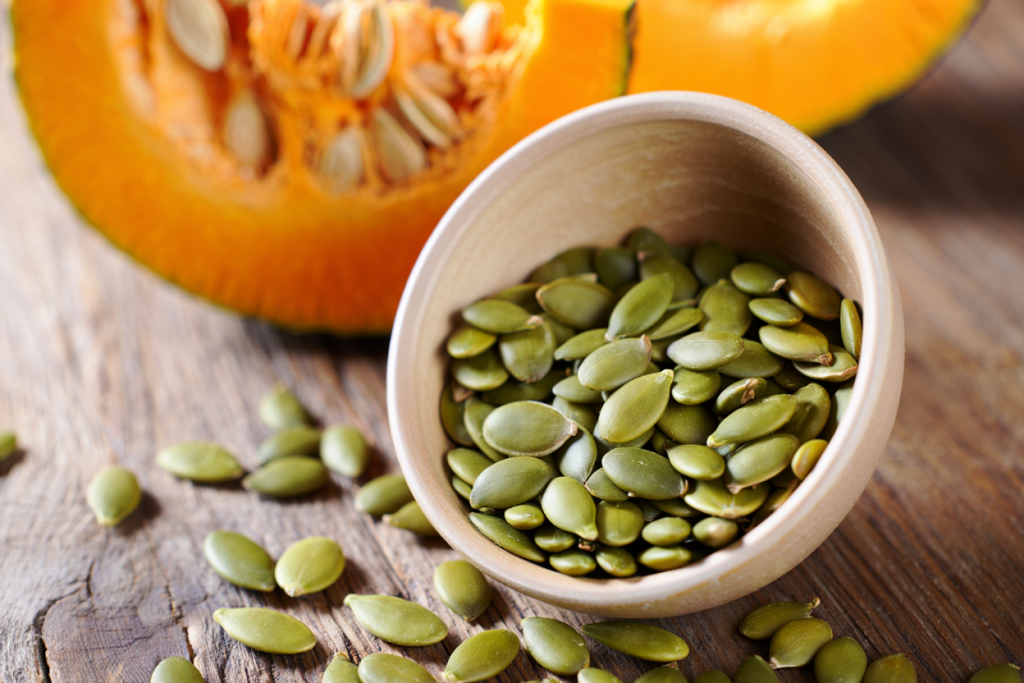
Image: A close-up view of dried pumpkin seeds (pepitas), a protein- and nutrient-rich snack.
In summary, pumpkin seeds provide a balanced mix of protein, fiber, and healthy fats – along with magnesium and zinc – which means they fill you up, fuel muscles, and deliver many essential micronutrients. Compared to many other nuts and seeds, they are especially high in magnesium and iron, making them a standout choice for nutrition.
Health Benefits of Pumpkin Seeds
Thanks to their rich nutrient profile, pumpkin seeds offer a range of health benefits. Here are the key ways they can boost your wellness:
- Heart & Bone Support: Pumpkin seeds are a “suitable source of healthy fats, magnesium, and other nutrients that enhance heart and bone health”. The magnesium and antioxidants (selenium, vitamin E) in pumpkin seeds help maintain healthy blood vessels and strong bones. For example, magnesium is crucial for bone formation, and higher magnesium intake is linked to greater bone density. A heart-healthy diet rich in plant polyunsaturated fats – like those in pumpkin seeds – also supports cardiovascular wellness.
- Digestive Health & Weight Management: Each ounce of pumpkin seeds has about 1.8 g of fiber. Fiber-rich foods promote digestive regularity, help you feel full longer, and can aid weight management. In fact, diets high in fiber are associated with lower body weight and better blood sugar control. Adding pumpkin seeds to meals (salads, yogurt, oatmeal) can help stabilize blood sugar and curb overeating.
- Immune Support: Pumpkin seeds are high in vitamin E and antioxidants. Vitamin E is important for immune function and skin health. The antioxidants (like vitamin E and carotenoids) in the seeds help neutralize free radicals and reduce inflammation. Regularly snacking on pumpkin seeds can give your immune system a boost thanks to these protective compounds.
- Improved Sleep: Pumpkin seeds contain the amino acid tryptophan, a precursor to sleep-regulating hormones. A 1-oz serving has about 0.16 g of tryptophan. The body converts tryptophan to serotonin and then melatonin – known as the “sleep hormone”. In fact, research shows that consuming 1 g or more of tryptophan before bed can improve sleep quality. Thus, a bedtime snack of pumpkin seeds (or warm milk with ground seeds) could help you relax and rest easier.
Pumpkin Seeds for Men’s Health
Pumpkin seeds have specific benefits for men. They are rich in zinc and antioxidants, which support prostate and fertility health. For centuries pumpkin seeds were traditionally used as an aphrodisiac. Modern research suggests these seeds may indeed aid male reproductive health:
- Prostate Support: Studies show that pumpkin seed extract may benefit men with benign prostatic hyperplasia (BPH), a common prostate enlargement. A 2019 study found that pumpkin seed extract reduced urinary symptoms of BPH. The oil in the seeds contains natural compounds that may help shrink an overgrown prostate.
- Fertility & Testosterone: Pumpkin seeds are a great source of zinc, which is crucial for sperm production and male hormones. One study found zinc from pumpkin seeds improved both sperm quality and quantity. Adequate zinc also helps maintain healthy testosterone levels. (Interestingly, pumpkin seed oil may also help block excess DHT, a hormone linked to hair loss, but without causing low testosterone.)
In summary, eating pumpkin seeds may boost male fertility and prostate health. Men concerned about hair thinning or libido might especially benefit, thanks to the seeds’ zinc and healthy fats.
Pumpkin Seeds for Women’s Health
Women also gain unique benefits from pumpkin seeds. In particular, pumpkin seeds are an excellent source of iron and magnesium – minerals often needed in higher amounts by women. For example, one cup of seeds contains 9.5 mg of iron, which is over half the daily iron requirement for premenopausal women. This makes pumpkin seeds a smart snack for women prone to low iron (especially those with heavy menstrual cycles). The magnesium in pumpkin seeds (about 40% of the RDA per ounce) can also help ease menstrual cramps and support bone health. Additionally, the anti-inflammatory nutrients and tryptophan may help improve sleep quality and mood during hormonal changes (such as PMS or perimenopause).
Pumpkin Seeds for Sleep and Mood
Beyond general nutrition, pumpkin seeds have been touted as a natural sleep aid and mood booster. As mentioned, the tryptophan in the seeds helps produce serotonin and melatonin. Some nutrition experts even suggest enjoying a small handful of seeds or pumpkin seed powder before bed. The magnesium and B vitamins also play roles in relaxation and stress reduction. In fact, one review notes that magnesium-rich foods like pumpkin seeds may help improve sleep and even reduce insomnia symptoms.
Pumpkin Seeds for Hair and Skin
While few direct studies exist on eating pumpkin seeds for hair, their nutrient content can benefit hair and skin health. Pumpkin seeds (and especially pumpkin seed oil) are rich in antioxidants, vitamin E, and omega fatty acids – all key for hair growth and scalp health. Cleveland Clinic experts note pumpkin seed oil is antioxidant and anti-inflammatory, containing vitamin E, omega-3 fats and linoleic acid. These properties can strengthen hair follicles and improve scalp condition.
There is some research on pumpkin seed oil (not just seeds) for hair growth. For example, studies have found that men taking pumpkin seed oil supplements experienced significant hair count increases compared to a placebo. The mechanism may involve blocking excess DHT (a hormone that shrinks hair follicles). While more human studies are needed, including pumpkin seeds in your diet supplies nutrients that support hair – like zinc, iron, and healthy fats.
In practice, adding pumpkin seeds to your diet (and even using pumpkin seed oil) may contribute to stronger, shinier hair and healthier skin over time. For example, you might blend pumpkin seed oil into a conditioner or simply snack on seeds regularly for their vitamins and minerals.
Pumpkin Seeds vs. Sunflower Seeds
Sunflower seeds are another popular snack, so you may wonder: how do pumpkin seeds compare? Nutritionally, both seeds are excellent, but they shine in different ways. A recent comparison notes that “pumpkin seeds and sunflower seeds are both good sources of dietary fiber, protein, and magnesium”. However, there are key differences:
- Fiber: Whole (unhulled) pumpkin seeds are very high in fiber (about 5 g per ounce) – more than hulled sunflower seeds (~3 g). However, most people eat hulled pumpkin seeds, which have about 1.8 g fiber per ounce. Hulled sunflower seeds have about 3 g, so sunflower seeds can edge out if shell is removed.
- Protein: Hulled pumpkin seeds pack more protein (about 8 g per ounce) compared to sunflower seeds (~5.5 g). So if protein is your goal, pumpkin seeds are the winner.
- Magnesium: Pumpkin seeds are magnesium powerhouses – an ounce of hulled pumpkin seeds has about 156 mg of magnesium (40% of DV), whereas the same amount of sunflower seeds has only ~37 mg.
- Calories: Both seeds are similar in calories (roughly 160–165 kcal per ounce). Sunflower seeds have slightly more fat (14 g vs 13.9 g) and a bit less protein.
- Other Nutrients: Pumpkin seeds generally contain more zinc and iron per ounce, while sunflower seeds have a bit more vitamin E.
In summary, sunflower seeds and pumpkin seeds are both nutritious, but pumpkin seeds tend to have more protein, magnesium, and some minerals, whereas sunflower seeds (especially unhulled) are slightly higher in fiber. Both can be healthy additions, but many dietitians consider pumpkin seeds to have a slight edge for overall nutrient density.
How to Enjoy Pumpkin Seeds (Recipes & Serving Ideas)
One of the great things about pumpkin seeds is how easy they are to add to your diet. Here are some tasty ideas and recipes:
- Roasted Pumpkin Seeds: Clean and dry the seeds from a fresh pumpkin or buy raw pepitas. Toss them with a little olive oil (or melted butter) and sea salt. Spread on a baking sheet and roast at 325°F (160°C) for about 20 minutes, stirring occasionally, until golden brown. You can also flavor them with spices like smoked paprika, curry powder, garlic powder, or cinnamon-sugar for variety. Roasted pumpkin seeds make a crunchy, satisfying snack or salad topper.
- Salad and Grain Toppings: Sprinkle raw or lightly toasted pumpkin seeds on green salads, grain bowls, oatmeal, or yogurt to boost protein and add crunch. They pair well with leafy greens, berries, roasted vegetables, and grains.
- Homemade Granola & Trail Mix: Mix pumpkin seeds into homemade granola with oats, nuts, dried fruit, and a touch of honey or maple syrup. Or blend them with almonds, dried fruits, and coconut for a nutty trail mix. This makes a portable, nutrient-dense breakfast or snack.
- Baking: Add pumpkin seeds into breads, muffins, cookies, or energy bars. For example, stir them into whole-grain muffin batter or press them on top of crusty bread before baking. They toast up in the oven and give baked goods extra texture and nutrients.
- Pumpkin Seed Butter: Grind raw or toasted pumpkin seeds in a food processor until smooth to make pumpkin seed butter (similar to peanut butter). Add a pinch of salt or sweetener if desired. You can spread this seed butter on toast, blend into smoothies, or use in sauces. Pumpkin seed butter is a creamy way to enjoy all the nutrients of the seeds.
- Soups and Sauces: Blend pumpkin seeds into soups for creaminess, or use them to thicken and enrich sauces (like pesto or curry). In some cuisines, ground pumpkin seeds are used as a base for sauces (e.g., Mexican pipian sauces).
Most pumpkin seed recipes are simple and quick. You can even enjoy them raw for maximum nutrients. Just remember that plain raw or dry-roasted (no oil) seeds will have slightly fewer calories than oil-roasted. Store seeds in a cool, dry place or refrigerator to prevent them from becoming rancid.
FAQs About Pumpkin Seeds
Q: Are pumpkin seeds good for you?
A: Yes. Pumpkin seeds are a nutritional powerhouse. They are full of protein, healthy fats, fiber, magnesium, zinc, and antioxidants. These nutrients support heart health, bones, immunity, and more. Regularly snacking on pumpkin seeds can improve overall nutrition intake. (Of course, balance them in a varied diet.)
Q: How many calories do pumpkin seeds have?
A: About 160 calories per ounce. Specifically, 1 ounce (28 g) of raw unsalted pumpkin seeds has about 163 calories. Most of those calories come from healthy fats (14 g) and some from protein (8.5 g). A ¼ cup (30 g) contains roughly 170–180 calories. If you’re tracking calories, note that pumpkin seeds are calorie-dense, so a small serving goes a long way.
Q: Are pumpkin seeds high in protein?
A: Yes, they are a good plant protein source. An ounce of pumpkin seeds provides about 8.5 grams of protein – similar to some nuts and more than most vegetables. This makes them an excellent protein-rich snack for vegetarians and vegans. Including pumpkin seeds in meals (like salads or grain bowls) can help you meet your daily protein needs.
Q: Can pumpkin seeds help with sleep?
A: Possibly. Pumpkin seeds contain tryptophan, which is converted into serotonin and melatonin – hormones that regulate sleep. Eating them before bed (for example, warm milk with ground pumpkin seeds) may promote relaxation. One study noted that taking about 1 g of tryptophan before sleep can improve sleep quality. So while pumpkin seeds aren’t a cure for insomnia, their nutrients may support better sleep.
Q: Do pumpkin seeds help hair growth?
A: Pumpkin seeds alone won’t magically regrow hair, but they provide nutrients that support healthy hair. They are rich in zinc and omega fatty acids, which nourish hair follicles. Pumpkin seed oil has been studied for hair loss: some research shows it may improve hair count when taken as a supplement. Eating pumpkin seeds gives you those beneficial vitamins and oils internally. For best results, include them as part of an overall healthy diet for hair (along with protein, biotin, and scalp care).
Q: Is it better to eat pumpkin seeds or sunflower seeds?
A: Both are healthy, but pumpkin seeds win on protein and magnesium. As noted above, 1 ounce of pumpkin seeds has about 8 g protein and 156 mg magnesium, while sunflower seeds have ~5.5 g protein and 37 mg magnesium. Sunflower seeds (hulled) have a bit more fiber (3 g vs 1.8 g). So if you want more protein and minerals, choose pumpkin seeds; if you want more fiber, hulled sunflower seeds are slightly better. Ideally, enjoy both!
Q: How should I store pumpkin seeds?
A: Store them in a cool, dry place – ideally in an airtight container in the refrigerator or freezer. This prevents them from going rancid, since they contain oils. Proper storage can keep them fresh for 6–12 months. If they smell strongly or bitter, they may have spoiled.
Q: What are some easy pumpkin seeds recipes?
A: One of the simplest is roasted pumpkin seeds. Clean and dry the seeds, toss with olive oil and salt, and bake until crisp. You can eat them alone as a snack or top salads/yogurt with them. Blend pumpkin seeds into smoothies or nut butter recipes for extra nutrition. You can also grind them into sauces or bake into bread. The possibilities are endless!
Conclusion
Pumpkin seeds (pepitas) are a tiny snack with a big nutrition payoff. They pack a powerful mix of protein, fiber, healthy fats, magnesium, zinc, and antioxidants that benefit heart health, bones, immunity, sleep, and more. Whether you’re looking to boost your protein intake, improve prostate health, get better sleep, or simply enjoy a tasty crunchy topping, pumpkin seeds deliver genuine benefits. Remember to include them in your diet in moderation – a small daily handful goes a long way.
Try adding roasted pumpkin seeds to your salads, snacks, or breakfast cereals; or make a homemade pumpkin seed butter. You’ll not only add crunch and flavor, but also load up on nutrients that support men’s and women’s health, hair, sleep, and overall wellness.
If you enjoyed this guide, share it with friends and let us know in the comments how you like to eat pumpkin seeds! We’d love to hear your favorite recipes or how pumpkin seeds have helped your health. Stay healthy and happy snacking on these mighty seeds!
Meta Title: Pumpkin Seeds: Tiny Snack, Big Nutrition Boost | Benefits
Meta Description: Pumpkin seeds, or pepitas, are packed with protein, healthy fats, and minerals. Discover pumpkin seeds benefits, nutrition, and recipes for better health.