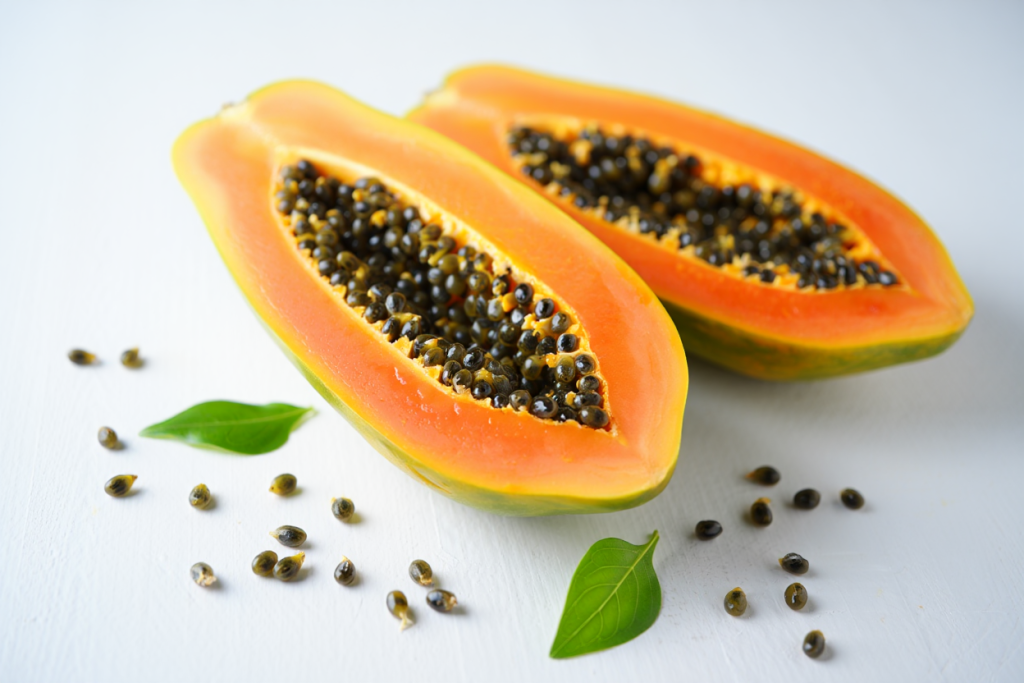
Halved ripe papaya fruit showing its black papaya seeds. Papaya seeds are an often-overlooked superfood for digestive health and natural detoxification. These tiny black seeds, hidden inside the sweet papaya fruit, pack fiber, healthy fats, and proteolytic enzymes (like papain) that promote gut health. Consuming papaya seeds can help bulk up stools and support bowel regularity, aiding the body’s natural cleansing process. They also contain compounds (such as papain and carpain) that may have antiparasitic effects, traditionally used to expel intestinal worms. In this article, we explore papaya seeds benefits – from digestive relief and detox support to weight management and liver health – as well as practical tips for eating them and important side effects to consider.
Papaya seeds’ nutrient profile is impressive. A 100 g serving of dried seeds yields about 558 calories, rich in protein, dietary fiber and monounsaturated fats (oleic acid). They are also loaded with polyphenol antioxidants and flavonoids that combat inflammation and oxidative stress. One analysis notes papaya seeds contain iron, magnesium, calcium and zinc, all of which support digestion and metabolic health. In practice, this means papaya seeds may help lower cholesterol and triglycerides – one review found that a high-MUFA diet (rich in oleic acid) cut triglycerides by ~19% – and improve blood pressure due to their fiber and antioxidant content. The combination of fiber and healthy oils also contributes to satiety and weight management. In fact, papaya seeds contain compounds that boost metabolism and prevent excess fat absorption, while their fiber keeps you feeling full longer to naturally curb calorie intake.
Digestive Health Benefits
Papaya seeds are most famous for aiding digestion. They supply both insoluble fiber and the enzyme papain to support gut motility and protein breakdown. Fiber adds bulk to stool and accelerates transit, which can relieve constipation and cleanse the colon. For example, one study noted that seeds and fiber from papaya significantly increase stool frequency. Papain – a natural enzyme from the papaya plant – helps break down dietary proteins into amino acids, reducing bloating and indigestion. Nutrition experts say eating about a teaspoon of crushed papaya seeds daily may ease common digestive complaints (bloating, indigestion, sluggish bowel). Additionally, papaya seeds contain alkaloids (like carpain) with antibacterial and antiparasitic activity. These compounds can inhibit harmful gut bacteria and even act against intestinal worms. In short, adding papaya seeds to your diet creates a healthier gut environment by promoting regular eliminations and attacking pathogens – two key steps in natural detoxification.
Parasite Cleansing and Antimicrobial Effects
One of the most touted uses of papaya seeds is their anti-parasitic effect. Several small studies suggest papaya seed extracts can help clear intestinal worms. In a notable trial, Nigerian researchers gave children a papaya-seed-and-honey elixir and found 76.7% of them were parasite-free after 7 days (versus 16.7% on placebo). In the study’s own words, “air-dried C. papaya seeds are efficacious in treating human intestinal parasites and without significant side effects”. These effects are thought to come from papaya’s enzymes (papain) and alkaloids (carpain), which can paralyze or kill helminths. Similarly, pumpkin seeds are also known to contain cucurbitacin, a compound that immobilizes worms. For patients seeking gentle natural remedies, adding papaya seeds (and even pumpkin seeds) to the diet is often recommended to help keep the digestive tract parasite-free. However, it’s important to note that mainstream medicine advises caution. The Cleveland Clinic highlights that while such remedies exist, evidence is limited and trace amounts of cyanide in papaya seeds mean they should not replace conventional antiparasitic drugs. Always consult a healthcare professional for parasite infections, and treat papaya seeds as a supplemental option rather than a sole cure.
Weight Management and Metabolic Boost
Beyond cleansing, papaya seeds can support weight loss and metabolism in a few ways. As noted, their high fiber helps you feel full longer, which naturally cuts cravings. Some studies show that diets rich in monounsaturated fats (like the oleic acid in papaya seeds) improve metabolic markers – for instance, lowering triglycerides and aiding blood sugar control. Papaya seeds are also said to “regulate metabolism and prevent fat absorption”, making them potentially useful for preventing obesity. While there’s no magic ingredient in papaya seeds that burns fat on its own, their nutrients (fiber, enzymes, antioxidants) all contribute to a healthy metabolic rate. In practice, adding a teaspoon of papaya seeds to meals or smoothies can be a small, cumulative way to aid weight management as part of a balanced diet.
Liver Support and Detoxification
The liver plays a central role in body detox, and papaya seeds may lend it support. Early research suggests papaya seed extract can improve liver antioxidant enzymes and protect against chemical-induced damage. For example, animal studies have found papaya extracts mitigate liver injury by reducing inflammation and oxidative stress. Traditional medicine has used papaya seed tonics as liver cleansers – one source even recommends crushed seeds with lime juice to help recover from cirrhosis. More recently, some experiments indicate papaya seeds can help “cleanse the liver and protect it from toxin-induced damage”, making them a natural remedy for improving liver function. These effects likely come from the seeds’ antioxidants and phytochemicals, which support detoxification pathways. While human studies are scarce, the combination of fiber and antioxidants means papaya seeds can help your body flush out toxins more efficiently via the digestive tract and provide raw materials for the liver’s cleansing processes.
Other Health Perks
Papaya seeds boast additional health benefits thanks to their rich phytochemicals. They have strong antioxidant and anti-inflammatory properties, courtesy of flavonoids and polyphenols. This means they may help neutralize free radicals, lower chronic inflammation, and protect against diseases like heart disease and arthritis. In fact, regular consumption could help “reduce inflammation, alleviate pain, and lower the risk of chronic illnesses”. Papaya seeds also exhibit antibacterial and antiviral effects in lab studies – they’ve been shown to inhibit pathogens such as E. coli and Salmonella. Kidney health may benefit too: some evidence suggests papaya seeds protect kidney cells from oxidative stress and help prevent stone formation. They may even have anticancer potential: compounds like isothiocyanates in papaya seeds have inhibited cancer cell growth in vitro. Finally, the seeds’ monounsaturated fats and fiber can modestly improve heart health by lowering LDL cholesterol and blood pressure. Overall, papaya seeds are a nutrient-packed food; adding them to your diet taps a broad range of digestive and systemic benefits.
Papaya Seeds vs. Pumpkin Seeds
Although both are “superfood” seeds, papaya and pumpkin seeds have distinct profiles. Pumpkin seeds (pepitas) are celebrated for their high magnesium, zinc, vitamin E and protein content. They also contain an amino acid called cucurbitacin that can paralyze intestinal worms. In contrast, papaya seeds are lower in protein but offer unique enzymes and alkaloids. Papaya seeds contain the digestive enzymes papain and carpain, and are unusually rich in fiber and polyphenol antioxidants. For parasite removal specifically, both seeds are used traditionally: pumpkin seed cucurbitacin is antiparasitic, while papaya seed extracts have shown real efficacy in studies. In terms of taste, pumpkin seeds have a mild, nutty flavor, whereas papaya seeds are peppery and bitter (more akin to black pepper). Nutrition-wise, you get more minerals and protein from pumpkin seeds, but papaya seeds bring fiber, digestive enzymes, and a potent anti-helminthic punch. Many nutritionists suggest including both: use pumpkin seeds as a crunchy snack or salad topper, and add papaya seeds in smaller amounts for their medicinal qualities.
How to Eat Papaya Seeds
Turning papaya seeds into a dietary habit is easy. They can be eaten raw or cooked, whole or ground, though their sharp taste means most people start small. Here are some popular ways to use them:
- Straight: Scoop 1-2 teaspoons of fresh papaya seeds and eat them raw. They have a peppery, spicy flavor (some liken it to radish or black pepper). Chew them well or swallow with water; start with a few seeds and work up to a teaspoon or two daily.
- Smoothies: Add papaya seeds to your fruit smoothies. For example, blend 1 tsp of seeds with ripe papaya (or banana, mango) and yogurt for a papaya seed smoothie. The fruit and yogurt tame the bitterness while you gain fiber and enzymes. Experiment with fruits like pineapple or berries – they all mix well.
- Salads & Dressings: Crush seeds with a mortar or grind briefly, then sprinkle them on salads for a crunchy, spicy kick. You can also blend ground seeds into vinaigrettes: mix with olive oil, lemon juice, salt and pepper for a zesty papaya seed dressing.
- Infused Water: For a detox tonic, mash a few seeds and steep them in cold water or lemonade overnight. This creates a subtly flavored drink that carries some nutrients. Strain and sip the water through the day.
- Paste/Marinade: Grind seeds and mix with honey or lime juice to make a paste. Some traditional remedies call for 3–4 crushed seeds blended with juice to treat liver issues. In cooking, papain-rich seeds also tenderize meat: add crushed papaya seeds to a marinade for chicken or beef (the enzyme breaks down tough fibers).
- Sprinkled on Foods: Mix ground papaya seeds into yogurt, oatmeal, or sauces. You can even use them like a spicy condiment on pasta or grains. Just like black pepper, a small pinch of crushed papaya seeds can enhance flavor and nutrition.
- Papaya Seed Snack Mix: Combine whole or coarsely crushed papaya seeds with nuts, dried fruit and spices to make a nutritious snack mix. This is an easy way to eat them if you enjoy trail mixes.
Remember moderation: papaya seeds are potent. Nutritionists suggest starting with half a teaspoon to one teaspoon per day and increasing if tolerated. Drinking plenty of water helps. Many people find creative recipes to mask the taste – for example, blending seeds into a fruit smoothie or using them in a spicy salsa. With practice, papaya seeds become a versatile pantry ingredient.
Three vibrant fruit smoothies in glass jars. Smoothies can be boosted with papaya seeds for added detox benefits. Incorporating papaya seeds into recipes is simple. Try this papaya banana smoothie: blend papaya seeds with sliced banana, pineapple chunks, coconut water and ice. Or mix ground seeds into a yogurt-based dressing for your salad. The key is to pair papaya seeds with strong flavors (citrus, ginger, herbs) to balance their bitterness. Gradually build up the amount as you acclimate to their taste.
Papaya Seeds Side Effects and Precautions
While papaya seeds are generally safe in small doses, excessive use can cause issues. They are very concentrated in potent compounds, so too many seeds can upset the stomach, causing diarrhea or nausea. Studies note that high intake of papaya seed extract (with benzyl isothiocyanate) could be harmful to cells in large amounts.
Another important caution is fertility. Animal research shows that papaya seed extracts can reduce fertility – for example, they lowered sperm production in male rats. Likewise, some sources warn that pregnant or nursing women should avoid large amounts of papaya seeds (or papaya latex/juice) because papain could trigger contractions. In short, we recommend using papaya seeds in moderation (1–2 tsp daily max) and stopping if you notice any adverse effects. If you have a medical condition (especially pregnancy, liver/kidney issues, or blood thinners), check with a doctor before using papaya seeds as a supplement. In all cases, treat papaya seeds as a nutritious food rather than a medicine: they’re safe for most people when eaten sensibly, but should not replace medical treatments.
Papaya Seeds vs Pumpkin Seeds
For comparison, pumpkin seeds offer a different set of benefits. Pumpkin (pepita) seeds are extremely high in magnesium, zinc, vitamin E and protein, nutrients that papaya seeds lack. Pumpkin seeds also help digestion via fiber and healthy fats, and contain cucurbitacin – a compound that paralyzes intestinal parasites. In contrast, papaya seeds have their own unique advantages: they supply powerful digestive enzymes (papain, carpain) and are rich in antioxidants and fiber.
In practice, both can be part of a healthy diet. If your goal is parasite control, both seeds can help: pumpkin seeds’ cucurbitacin and papaya seeds’ enzymes are complementary. For digestion and detox, papaya seeds take the lead with their enzyme content. For general nutrition and snacking, pumpkin seeds are often preferred for their pleasant taste and crunch. For example, add pumpkin seeds to granola or salads, and use papaya seeds sparingly in smoothies or dressings. In terms of flavor, pumpkin seeds are mild and nutty, while papaya seeds are sharp and peppery. A balanced approach is to eat a variety of seeds: you might sprinkle pumpkin seeds on yogurt for daily nutrients, and include a teaspoon of papaya seeds in a weekly smoothie for digestive support.
FAQs
Q: Are papaya seeds safe to eat every day? Yes, in small amounts. Most healthy adults can eat a teaspoon or two of papaya seeds daily without problem. However, because they are very potent, start with a small amount (½–1 tsp) and see how you feel. Pregnant women and people on certain medications should consult a doctor first. Always drink plenty of water when increasing seed intake.
Q: Do papaya seeds really kill parasites? Some evidence suggests they can help. For instance, a clinical trial found 76.7% of children given a papaya-seed concoction cleared their parasites, compared to only 16.7% on a placebo. This is likely due to papaya’s enzymes (papain) and alkaloids (carpain) having antiparasitic effects. However, medical experts recommend using them as a complement to (not a substitute for) professional antiparasitic treatments.
Q: How do papaya seeds help with digestion? Papaya seeds improve digestion by providing fiber and digestive enzymes. Fiber adds bulk and moves waste through the gut, while papain breaks down proteins that might otherwise ferment and cause gas. Together, these actions relieve constipation and bloating, promoting a healthier gut environment.
Q: What does a papaya seed taste like? They have a very peppery, bitter flavor – somewhat similar to radish, horseradish or strong black pepper. Most people find a small amount tolerable, but they can be overwhelming if eaten raw in large quantity. That’s why many prefer to mix them into smoothies or sauces to mask the taste.
Q: Papaya seeds vs pumpkin seeds – which is better? Neither is strictly “better” – they’re just different. Pumpkin seeds provide more protein, minerals (magnesium, zinc) and healthy fats, making them great for general nutrition and snacking. Papaya seeds offer unique enzymes and a higher fiber content, making them more specialized for digestion and detox. In practice, use pumpkin seeds daily for nutrition, and papaya seeds periodically for their cleansing effects.
Q: Can I put papaya seeds in my smoothie? Absolutely. In fact, adding papaya seeds to smoothies is one of the easiest ways to consume them. Try blending a teaspoon of seeds into a fruit smoothie – for example, a papaya-banana-coconut smoothie – to harness their digestive and detox benefits. The fruit flavors will hide the seed’s bitterness while delivering its nutrients.
Papaya seeds may be tiny, but their impact on detox and digestive health is anything but small. From relieving constipation to helping fight parasites, they offer many benefits when used properly. We hope this guide helps you make the most of papaya seeds. If you try adding them to a recipe or smoothy, share your favorite combinations in the comments below! And if you found this information helpful, consider sharing it on social media – you might just help someone else discover this hidden superfood.