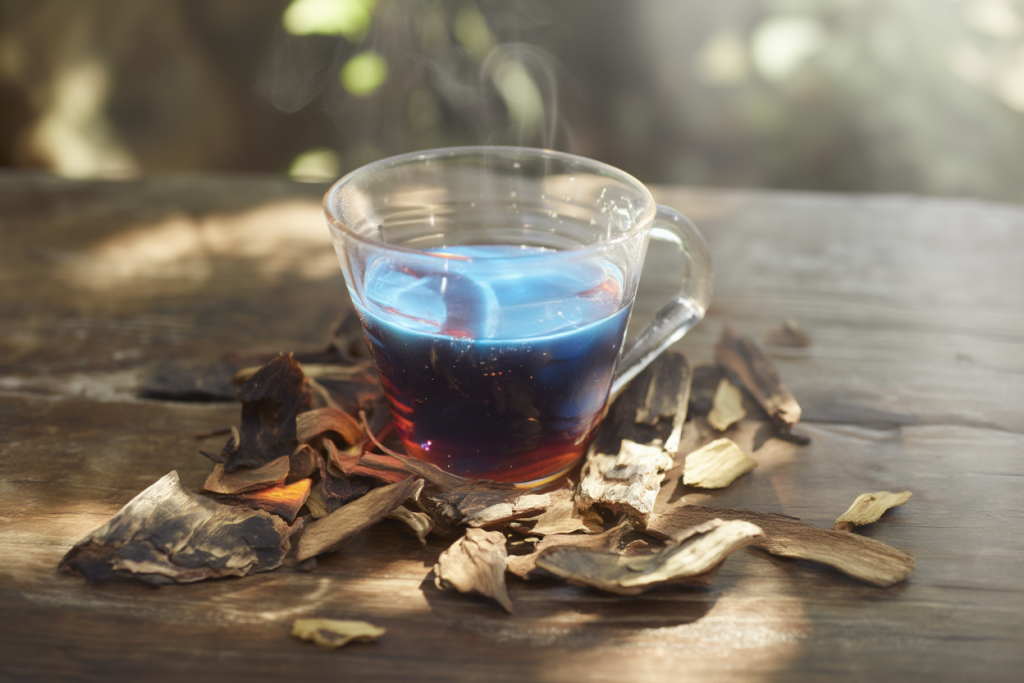
Palo Azul tea, made from the bark of a kidneywood shrub, is a traditional herbal drink celebrated for its vibrant blue color and potential health perks. Used for centuries in Mexican folk medicine, this natural infusion is often enjoyed as a detox beverage that may support kidney function and overall wellness. In this guide we’ll cover the key benefits of this tea, brewing tips, and important safety information.
Cup of Palo Azul herbal tea in a floral cup. Over time, this herbal infusion has become popular as a natural detox drink. It is rich in compounds like flavonoids, tannins, saponins, and D-pinitol, which are believed to contribute to many of the herb’s health effects.
What is Palo Azul Tea?
It comes from the bark of a shrub scientifically known as Eysenhardtia polystachya. This plant, native to Mexico, is traditionally called “kidney wood” because of its historic role in treating kidney and urinary tract ailments. The bark is boiled or steeped to make tea, and the liquid turns a deep blue or purple due to water-soluble flavonoids. The mild, earthy brew has been used to treat kidney stones, urinary issues, and aches for generations.
History and Cultural Significance
Palo Azul has a rich history in Mexican and Central American traditional medicine. The name “palo azul” means “blue stick” in Spanish, a nod to the tea’s vivid color. Indigenous communities in regions like the Sierra Madre mountain range used palo azul for generations. In fact, some native healing rituals involved burning palo azul wood for purification. Today, however, the primary use is brewing the bark into tea for health and hydration.
Native healers prized palo azul not just for its medicinal properties but also for its use as a dye. The bark’s pigments were traditionally used to color fabrics blue-purple, and the tea itself has inspired folklore. (Fun fact: adding lemon juice will shift the blue tea to pink-red, while a pinch of baking soda turns it green – the anthocyanins in the bark act like a natural pH indicator.)
Key Compounds in Palo Azul
The active molecules in palo azul include flavonoids, tannins, saponins, and D-pinitol. Flavonoids are powerful antioxidants – they neutralize free radicals and may improve circulation and inflammation. (Palo azul’s flavonoids include quercetin and related compounds.) Tannins also have anti-inflammatory and antimicrobial effects. D-pinitol is particularly notable: it is a natural sugar-alcohol that mimics insulin’s action, improving glucose uptake in cells. This may partly explain the tea’s reputation for balancing blood sugar levels.
Because the tea is made from wood bark rather than leaves, it is naturally caffeine-free. It also provides trace minerals (like potassium and magnesium) and a bit of fiber. All together, these compounds give palo azul tea its antioxidant and detox-supporting profile.
Scientific Insights on Palo Azul
Modern research is beginning to validate some traditional uses of palo azul:
- Diuretic effects: Studies confirm that palo azul acts as a mild natural diuretic. In other words, it increases urine output. This “kidney flush” effect helps the body eliminate excess water, salt, and toxins from the kidneys.
- Kidney protection: Laboratory experiments suggest palo azul’s antioxidants protect kidney cells from damage. This could help prevent the formation of kidney stones and maintain healthy kidney function.
- Metabolic impact: A 2013 study found that palo azul extract activated PPARγ, a key fat-cell regulator. In that study, the extract increased insulin-sensitizing adiponectin and lowered fat-storage leptin in fat cells, hinting at better insulin sensitivity. A 2016 study showed palo azul extract promoted muscle cell development in vitro, suggesting it could support lean muscle mass. These findings align with claims that palo azul may aid weight management.
- Digestive support: In animal tests, the palo azul compound D-pinitol helped relieve diarrhea. The tannins and flavonoids may also soothe the intestinal lining and aid nutrient absorption.
- Anti-inflammatory properties: Research has demonstrated that palo azul’s flavonoids can reduce inflammatory markers (like TNF-α and IL-6) in laboratory models. This supports its use for joint pain, gout, and arthritis relief. Indeed, animal experiments showed improved arthritis symptoms with palo azul extract.
- Blood sugar balance: In animal models, palo azul’s antioxidants lowered blood glucose and prevented harmful advanced glycation end-products. By reducing oxidative stress, it may help maintain healthy insulin function.
- Safety: Limited toxicology data suggest palo azul is low in toxicity. One review noted that typical doses caused no serious side effects. However, rigorous human studies are still needed to fully confirm safety and efficacy.
While these scientific insights are encouraging, remember they are early-stage. Most evidence comes from lab or animal studies. No large clinical trials in people have been done yet. Palo azul tea should be seen as a complementary wellness drink, not a substitute for medical treatment.
Health Benefits of Palo Azul Tea
Bringing the research and tradition together, here are the key health benefits people associate with palo azul tea:
- Kidney health & detox: Palo Azul is often called a kidney detox tea. Its diuretic action (increasing urine flow) helps flush out toxins, salts, and excess minerals from the kidneys. This can reduce the risk of kidney stone formation and support overall urinary tract health. The tea’s antioxidants protect kidney cells from oxidative stress, fostering a healthier renal environment.
- Digestive support: The bark’s D-pinitol content may ease digestive upset. Animal studies showed it relieved diarrhea. Many herbalists also credit palo azul with improving digestion and preventing constipation. Its mild flavor means people can drink it without stomach irritation.
- Weight management: Although no tea can “melt fat” on its own, palo azul tea can support weight loss efforts. Its diuretic effect reduces water retention and bloating. Some lab evidence suggests it boosts metabolism by favorably altering fat and muscle cells. Users often drink it as part of a low-calorie diet; the tea itself is calorie-free and may slightly increase feelings of fullness.
- Anti-inflammatory & pain relief: Many of palo azul’s compounds reduce inflammation. Regular drinkers report relief from joint and muscle pain, likely due to flavonoids suppressing inflammation. It is traditionally used for arthritis, gout, and backaches.
- Blood sugar regulation: For people monitoring glucose, palo azul tea might help. Its antioxidants and D-pinitol work together to keep blood sugar more stable. While not a treatment for diabetes, it can be a healthy, hydrating drink for diabetics (still, check with your doctor).
- Antioxidant support: Overall, palo azul is a rich source of natural antioxidants. These help the body neutralize free radicals from pollution, poor diet, or exercise. Antioxidants are linked to lower risk of chronic diseases and slower aging.
Remember: these are potential benefits. Individual results vary. Most people notice smoother digestion and mild diuretic effects. Serious claims (like “cures diabetes” or “magic weight loss”) aren’t backed by science. Drink palo azul tea as part of a healthy lifestyle.
How to Brew Palo Azul Tea
Making palo azul tea at home is simple. Follow these steps for a flavorful, healthful brew:
- Gather ingredients: Use about 1 ounce (roughly 3 tablespoons) of dried palo azul bark or wood pieces. (It’s often sold under names like “palo azul bark” or “kidney wood”.)
- Boil water: Bring approximately 1 gallon (about 4 liters) of filtered water to a rolling boil.
- Simmer: Add the palo azul pieces to the boiling water. Reduce the heat and let it simmer for 20–30 minutes. The water will gradually turn a bright blue or purple as the bark infuses.
- Strain: Remove the pot from heat and strain out the bark using a cheesecloth or fine mesh strainer.
- Serve: Pour the vibrant blue tea into cups. Enjoy it hot, or let it cool and serve over ice.
- Store: Let any remaining tea cool, then cover and refrigerate. It can last a few days in the fridge. Chilling the tea helps preserve its antioxidants.
This long simmer extracts the most nutrients and color. For a quicker brew, you can steep palo azul bark in hot (not boiling) water for 10–15 minutes. The resulting drink will be milder and less colorful, but still beneficial. Adjust the brewing time and amount of bark to suit your taste – more bark or longer simmer = stronger tea.
Recipe Variations & Tips
- Flavoring: Palo azul tea is mild, woody, and subtly sweet. Many people add a slice of lemon, a cinnamon stick, fresh ginger, or a touch of honey to enhance the flavor. These additions can also add vitamin C or anti-inflammatory properties from the spices.
- Iced tea: After brewing, chill the tea and serve it over ice for a refreshing drink. You can mix in fruit juice (like pineapple or lemonade) to create a colorful beverage.
- Herbal blends: Palo azul can blend with other herbs. For example, combining it with dandelion or nettle can make a more potent detox tea. Just make sure any blend primarily contains natural, edible herbs.
- Re-steeping bark: Good-quality palo azul bark can often be reused. Add fresh boiling water and simmer again for 5–10 minutes to get a second brew.
- Straining tip: Because palo azul can be slightly gritty, consider using a tea sock or coffee filter if you don’t have cheesecloth.
Palo Azul Tea Side Effects and Precautions
Generally, palo azul tea is well-tolerated. However, some precautions apply:
- Diuretic effect: Expect more frequent urination. This means you may lose extra water and electrolytes. Drink extra water throughout the day to stay hydrated. Avoid drinking large amounts right before bedtime.
- Gastrointestinal upset: If consumed in very high amounts, it can cause mild stomach cramps or nausea. If you feel any discomfort, reduce your intake or stop for a few days. The cited Health.com guide notes that unpleasant side effects like nausea or cramps have been reported in some users.
- Medication interactions: Palo azul’s diuretic action means it could potentially affect blood pressure or kidney medications. If you take prescription diuretics, insulin, or hypertension medications, consult your doctor before adding palo azul tea to your routine.
- Pregnancy and breastfeeding: There is little research on palo azul use in pregnancy or lactation. It’s safest for pregnant or nursing women to avoid it or seek medical advice first.
- Allergies: If you have a tree-bark allergy (rare), be cautious. Stop drinking it if you notice any allergic reaction (rash, itching, etc.).
- Quality matters: Only buy palo azul from reputable sources. Poor-quality products could be contaminated. Look for organic or third-party-tested brands.
In summary, palo azul tea has low toxicity. A medical review found few adverse effects when used traditionally. Nonetheless, if you have kidney disease or other health issues, check with a healthcare provider before use.
Where to Buy Palo Azul Tea
Palo azul has grown in popularity, so it’s widely available:
- Online retailers: Many health food websites and marketplaces sell palo azul bark or tea bags. Search for “Palo Azul”, “Kidney Wood Tea”, or “Blue Stick Tea” on platforms like Amazon or herb specialty sites.
- Herbal stores: Latin American grocery stores and natural health shops often carry it. Check the supplement or tea aisle for “Palo Azul (Eysenhardtia polystachya)”.
- Tea blends: Some detox tea brands include palo azul as an ingredient. Read labels to ensure palo azul is the primary herb, not a minor add-on.
When buying, read reviews and ingredient lists carefully. Make sure the product is 100% palo azul bark (no fillers). Since supply can fluctuate, prices vary – sometimes 1 ounce of bark costs a few dollars. Buying larger quantities usually saves money.
Scientific vs. Folk Claims
It’s worth noting that folklore often credits palo azul with dramatic effects (like “curing diabetes” or “detoxing the entire body”). Most of those claims aren’t proven. Always balance folk wisdom with scientific evidence. Use palo azul tea as a gentle supplement:
- Treat it like you would any herbal tea. Do not rely on it as a sole treatment for serious conditions.
- Combine it with healthy lifestyle choices (nutritious diet, exercise, hydration) for best results.
- Continue any prescribed medications unless your doctor advises changes.
FAQs
Q: What are the benefits of palo azul tea?
A: The tea is most noted for kidney and urinary support. It helps flush toxins through increased urination and may reduce kidney stone risk. Users also report smoother digestion (it can ease diarrhea) and reduced joint pain due to its anti-inflammatory flavonoids. Overall, it’s rich in antioxidants that promote general health.
Q: How do I make palo azul tea?
A: Simmer about 1 ounce of palo azul bark in 1 gallon of water for 20–30 minutes, then strain. The longer brew extracts more color and compounds. Adjust strength by using more bark or less water if needed. Serve hot or chilled, and add honey or lemon as desired.
Q: Does palo azul tea contain caffeine?
A: No. Palo azul tea is naturally caffeine-free since it’s made from wood bark, not tea leaves. You can drink it any time of day without the stimulant effects of caffeine.
Q: Can palo azul help with weight loss?
A: It’s often marketed for weight management. Its diuretic effect can reduce water weight (helping with bloating). Some lab studies suggest metabolic benefits. However, it is not a miracle solution—healthy diet and exercise are key to losing fat. Palo azul can complement a healthy routine by keeping you hydrated and possibly boosting metabolism slightly.
Q: What does palo azul tea taste like?
A: It has a mild, woody, slightly sweet flavor. Think of it as a smooth, light herbal tea without bitterness. Many find it pleasant to drink plain, but it also pairs well with lemon, cinnamon, ginger, or honey if you want extra flavor.
Q: Are there side effects of palo azul tea?
A: Side effects are rare. The main effects to watch for are increased urination and possible mild stomach upset. If you feel nauseated or have cramps, cut back your intake. Because it’s a diuretic, avoid overdoing it (e.g. several gallons a day). Always check with a doctor if you have kidney disease or take medications.
Q: Can palo azul help me pass a drug test?
A: Some claims on the internet say palo azul “detoxifies” your urine. However, no scientific evidence supports using palo azul or any tea to pass a drug test. At most, it may dilute urine slightly because it’s a diuretic, but it won’t remove drug metabolites.
Q: What does “palo azul” mean?
A: It literally means “blue stick” in Spanish, referring to the blue color of the tea. It’s also called “kidney wood” because of its traditional use for kidney ailments.
Q: How much palo azul tea can I drink per day?
A: Many people safely drink 1–2 cups (8–16 ounces) per day. Some drink more, but start with 1 cup daily to see how you feel. If you drink too much, you may urinate very frequently. Listen to your body’s signals.
Q: How should I store palo azul?
A: Keep the dried bark in a cool, dry, and dark place (like a pantry) in an airtight container. Moisture can spoil it. Properly stored bark can last for a year or more without losing potency.
Q: Where can I buy palo azul tea?
A: It’s widely available online (e.g. Amazon, herbal stores) and in some Latin American grocery or supplement stores. Look for labels that say Eysenhardtia polystachya or “Palo Azul (Kidney Wood)”. Buying from reputable herbalists or brands ensures good quality.
Conclusion
Palo Azul tea is a traditional blue detox tea with a long history of use. Its beautiful blue brew contains flavonoids, tannins, and other plant compounds that may support kidney health, aid digestion, and even help balance blood sugar. To make it, simply simmer the dried palo azul bark in water and enjoy the soothing, mildly sweet infusion hot or cold. Most people tolerate it well; just be mindful of its diuretic effect and start with a small amount to see how your body reacts. If you decide to try this “blue stick” tea, you’ll be joining many who use it as a natural wellness tonic.
Have you tried palo azul tea? Share your experience in the comments below, and don’t forget to share this article with friends interested in herbal remedies!