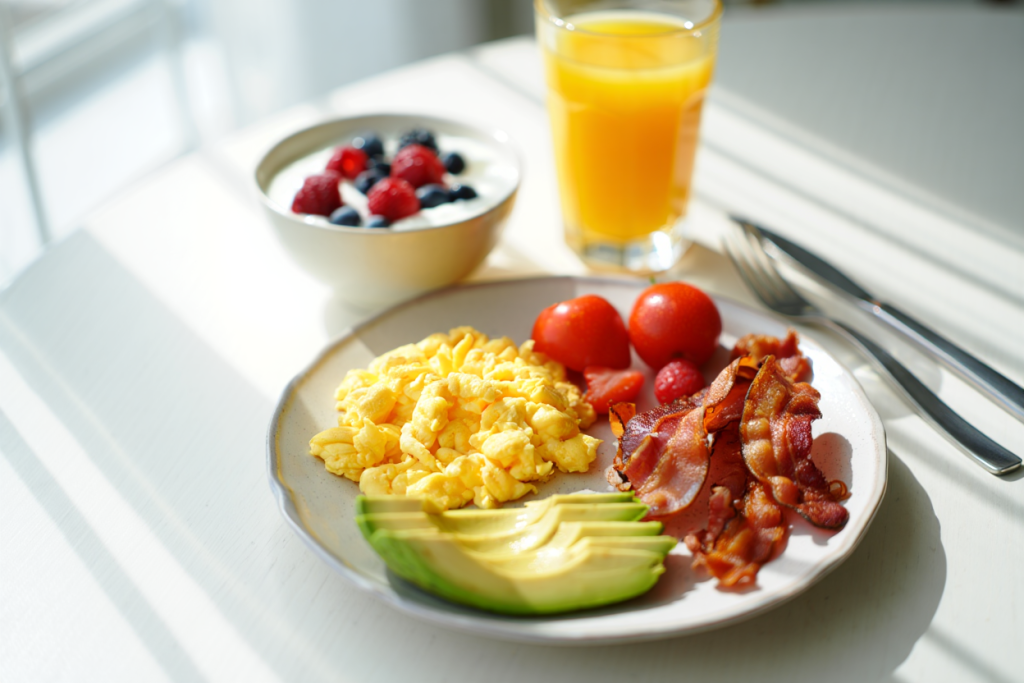
Starting your day with a high protein breakfast can make a big difference in energy and focus. For instance, nutritionists recommend around 20–30 grams of protein at breakfast (about 25% of a typical meal’s calories). Observational data shows breakfast eaters often have lower BMIs than those who skip breakfast, yet many people under-consume protein in the morning, saving most of their protein intake for dinner. By swapping in protein-packed foods, you can jump-start your metabolism and curb mid-morning cravings. This guide covers a range of tips — from quick smoothies to make-ahead bowls — to fuel your body and help meet weight-loss or muscle-gain goals.
Why a High Protein Breakfast?
Including extra protein in your first meal can control hunger and reduce cravings later. For example, studies found that girls eating a 35g high-protein breakfast reported greater fullness and less evening snacking than those with a normal breakfast. Likewise, experts say a protein-packed breakfast “helps you feel full and satisfied until lunch,” boosts energy, and can aid weight loss. Key benefits include:
- Increased Satiety: Protein delays hunger. Americans often skip breakfast (20% of people) and then overeat later. Eating protein in the morning helps curb late-day cravings.
- Boosted Metabolism: Protein takes more energy to digest. A protein-rich breakfast can increase calorie burn and slow carbohydrate digestion.
- Supports Weight Loss: A high-protein breakfast has been shown to aid weight management by increasing muscle mass and satiety hormones.
- Builds Muscle & Energy: Consuming protein early provides amino acids that help repair and grow muscle tissue, while also providing steady energy.
- Improved Blood Sugar Control: High-protein breakfasts improve glucose response after meals. In one study, participants eating a 30% protein breakfast had better blood sugar and insulin levels after a later carb meal, compared to those on a high-carb breakfast.
- Enhanced Focus: A protein-rich breakfast has been shown to increase concentration and alertness, reducing morning grogginess.
By fueling up on protein and healthy fats, you jump-start your metabolism and help your body use more energy throughout the day. Aim for about 20–30 grams of protein at breakfast; this typically covers ~25% of daily protein needs for most adults.
High-protein breakfast platter with eggs, yogurt, and peanut butter. A protein-packed morning meal can increase energy and fullness; research shows it helps keep you satisfied and boost metabolism. On-the-go smoothies, hearty protein bowls, and staples like eggs, yogurt, and lean meats all fit the bill. Below are some high protein breakfast ideas and recipes to try:
- Greek Yogurt Parfait: Layer Greek yogurt with fresh berries, nuts or granola. Greek yogurt provides ~15–20g protein per cup. For instance, one cup of plain Greek yogurt has ~20g protein, and adding 2 tablespoons of nuts or seeds adds another 4–8g. Top with fruit, honey, or protein granola for flavor and extra nutrients.
- Cottage Cheese Bowl: Top cottage cheese with pineapple, tomatoes, or avocado and seeds. One cup of cottage cheese provides ~20g protein. Add chopped veggies or fruit on top for fiber and micronutrients.
- Protein Oatmeal: Stir whey protein powder or peanut butter into cooked oatmeal. Top with seeds, nuts, or a scoop of Greek yogurt for extra protein (20–30g per serving). For example, adding 1 scoop protein powder (15–20g protein) or 2 tbsp nut butter (6–8g) can make the oatmeal extremely filling. Use milk (dairy or soy) instead of water, and mix in chia seeds or nuts for a protein and fiber boost.
- Egg Muffins or Frittatas: Whisk eggs with diced veggies, cheese, or cooked sausage, then bake in muffin tins or a casserole pan. These egg bites are easy to make in advance (meal prep) and reheat quickly. Customize with leftover veggies or meats. One large egg yields ~6g protein, so a 2-egg muffin has ~12g; add cheese or meat to bump it to 15–20g per muffin.
- Protein Pancakes/Waffles: Use protein powder, cottage cheese, or almond flour in place of some flour. For example, a scoop of whey protein or a cup of cottage cheese in pancake batter can give 20+g protein. Serve pancakes or waffles topped with Greek yogurt, berries, or nut butter to make them extra filling and add healthy fats.
- Savory Breakfast Bowl: Combine cooked whole grains (quinoa or brown rice), beans, avocado, salsa, and a protein like shredded chicken, turkey, or tofu. For instance, ½ cup cooked quinoa (~4g) plus ½ cup black beans (~7g) plus 2 tbsp seeds (~4g) easily reaches 15+g protein; adding chicken or a poached egg pushes it higher.
- Smoothie or Shake: Blend protein powder or Greek yogurt with fruit, spinach, oats, and milk (dairy or plant-based). Smoothies can be almost as filling as solid food when made right. For instance, one scoop of protein powder (20g protein) plus milk and fruit makes a single drink that qualifies as a high-protein breakfast.
- Breakfast Burrito (On the Go): Fill a whole-wheat tortilla with scrambled eggs or tofu, black beans or lean sausage, cheese, and salsa. Each typical burrito can pack 20+g protein; use extra fillings (beans, meat, cheese) to reach 30g or more.
Each of these ideas can be mixed and matched. For practical reference, try to include at least 20–30g of protein in your morning meal. For example, 2 large eggs (~12g) plus 1 cup Greek yogurt (~20g) together make ~32g. Or blend a scoop of protein powder (~20g) with milk and fruit for ~20–25g. Combining foods is key to hitting your protein goal.
High Protein Breakfast On the Go
Busy mornings call for portable options that still pack protein. Try these quick on-the-go ideas:
- Protein Shakes and Smoothies: Prep smoothies ahead in jars. Use ingredients like Greek yogurt, protein powder, nut butter, or silken tofu with fruits and milk. For example, blend a cup of Greek yogurt or milk with a scoop of protein powder, a banana, and berries. A typical protein shake can provide 20–30g of protein. Keep one in a travel bottle for a fast breakfast.
- Make-Ahead Breakfast Burritos: Assemble burritos using eggs or tofu, black beans or sausage, veggies, and cheese in a whole-grain tortilla. Wrap individually and freeze. The night before, thaw in the fridge or microwave it quickly in the morning. Each burrito can deliver 20g+ of protein.
- Overnight Oats/Jars: Mix oats with your choice of milk or yogurt, protein powder, and add-ins like chia seeds or nuts in a jar. Refrigerate overnight. Prep several jars at once for a grab-and-go batch; just stir and eat chilled the next morning.
- Portable Protein Bars or Balls: Choose bars that list at least 10–15g of protein and minimal added sugar. Or make homemade energy bites by mixing oats, nut butter, honey, and protein powder. Rolled into balls and stored in the fridge, these treats are easy to grab with a piece of fruit.
- Hard-Boiled Eggs & Snack Packs: Cook eggs ahead of time (each egg has ~6g protein). Pair 2 eggs with cheese sticks (7g each) and a small handful of nuts for a quick snack tray. Assemble snack packs of cut vegetables, berries, and a protein snack like jerky or almonds to complement your protein.
- Yogurt Parfait Cups: Layer Greek yogurt and fresh fruit in a jar or container, sprinkle with high-protein granola or chia seeds, and seal with a lid. The next morning you can grab this dairy-and-fruit combo (about 20g protein) without any prep.
Smoothies are easily customizable and can hold substantial protein along with fiber and micronutrients. Include a source of healthy fat—like nut butter or avocado—to slow digestion and keep you full longer. Be mindful of liquids and high-sugar ingredients; use unsweetened milk or water and whole fruits rather than juice.
So even on hectic days, these ready-to-go options help you slip in protein. Portable breakfast isn’t an excuse to snack on empty carbs; a prepared protein shake, smoothie, or burrito will beat hunger pangs during your commute or workout.
High Protein Breakfast Without Eggs
Eggs are often the go-to for breakfast protein, but they aren’t your only option. Many high-protein breakfasts require no eggs at all:
- Dairy or Plant Milk Bowls: Prepare hot cereals like oatmeal or quinoa in milk (dairy or fortified plant milk). Mix in whey or plant-based protein powder and top with nuts or seeds. A cup of soy or cow’s milk has ~7–8g protein, so using it as the cooking liquid boosts protein content significantly.
- Tofu Scramble: Sauté crumbled tofu with veggies and spices (turmeric gives it a golden color). Tofu packs ~10g protein per ½ cup. Combine with vegetables and even a sprinkle of nutritional yeast for a savory, egg-free scramble.
- Protein Pancakes: Make pancakes or waffles using protein-rich flours (almond, buckwheat) or by adding protein powder and mashed banana as egg replacement. For example, a scoop of protein powder (20g) plus oats yields a batter that bakes into pancakes with ~20+g protein. Top with Greek yogurt or nut butter.
- Chia or Flax Pudding: Mix chia or flax seeds with soy milk or cow’s milk and refrigerate. A typical chia pudding can contain ~10–12g protein per serving (using soy milk). Top with almond butter or hemp seeds to increase protein further.
- Greek Yogurt & Fruit: A bowl of thick Greek yogurt topped with berries and a drizzle of honey. Greek yogurt alone has ~15–20g protein per cup, so this simple meal is naturally high in protein.
- Nut Butter Toast: Spread almond or peanut butter (8g per 2 tablespoons) on whole-grain toast. Top with banana or berry jam. Pair with a glass of milk (or soy beverage) to complete the protein count.
- Breakfast Smoothie: As above, you can build protein smoothies using yogurt, protein powder, or silken tofu; no eggs needed at all.
By combining protein-rich ingredients like dairy, soy, beans, or nuts into your morning meal, you can easily reach your protein targets without any eggs. For example, replacing cow’s milk with soy or pea milk adds about 7–8g extra protein per cup, and blending protein powder into pancakes or oatmeal is another easy hack. A variety of egg-free recipes (from smoothies to vegan burritos) are still loaded with protein.
A high-protein breakfast smoothie made with apple, oats, and peanut butter. High-protein smoothies can be loaded with fruit, oats, nuts, and protein powder for a quick energy boost. Try to include ~20–30 grams of protein in your shake.
Smoothies like this can be prepared in minutes and carried in a to-go cup. Adding oats or nut butter not only ups the protein but also adds fiber and healthy fats, making the drink more filling. Each of the following can be made in a blender and enjoyed on the run:
- Banana Peanut Butter Smoothie: Blend a banana, a scoop of whey or plant protein, peanut butter, and milk. (~25g protein)
- Green Protein Shake: Spinach or kale, frozen mango, Greek yogurt or plant protein, almond milk. (~20g protein)
- Berry Oat Shake: Mixed berries, oats, vanilla protein powder, milk. High-fiber and ~25g protein.
- Chocolate Almond Smoothie: Cocoa powder, chocolate protein powder, almond butter, banana, milk. (~20–30g protein)
- Coffee Protein Smoothie: Cold coffee, vanilla protein powder, banana, Greek yogurt, cocoa. (~20g protein)
Each of these protein smoothies is a complete breakfast on its own. They deliver quick nutrients and can satisfy even when you’re not hungry for solid food. Plus, blending in greens or vegetables (like spinach or carrots) is easy to conceal in a smoothie, boosting fiber and micronutrients.
High Protein Breakfast Meal Prep
Batch cooking and planning ahead is the ultimate time-saver. Set aside an hour or two on the weekend to prep some of these ideas:
- Batch-Make Egg or Tofu Bakes: Bake a large tray of egg or tofu frittata or casserole with veggies and cheese. Once cooled, cut into portions and store in individual containers for the week.
- Freezer Breakfast Burritos: Assemble burritos as above and freeze them. Microwave one each morning for a hot, protein-rich start.
- Overnight Protein Oats: Portion oats, milk, chia seeds, and protein powder into jars for 3–5 days of breakfasts. Refrigerate overnight; then top with fruit or nuts in the morning.
- Sheet Pan Eggs: Spread chopped veggies and cracked eggs on a sheet pan and bake. Slice into squares; each square provides ~10–15g protein depending on ingredients.
- Protein Pancakes or Muffins: Cook a large batch of protein pancakes or high-protein muffins. Freeze extras; then reheat in a toaster or oven for a quick meal.
This means setting aside one morning or afternoon each week to cook. For example, bake a tray of tofu frittata on Sunday evening and cut it into portions. Use microwave-safe containers to heat leftovers quickly. Even chopping extra vegetables or cooking grains in advance can shave minutes off busy mornings. You can combine convenience with nutrition by preparing components (like grains or proteins) ahead of time.
Everyone’s lifestyle is different, so tailor these tips to your routine. If you bike or walk to work, a lighter option like a smoothie may suit you better, whereas if you sit at a desk, a hearty eggs-and-beans plate might be ideal. Combine protein with fiber and healthy fats (like avocado or nuts) to balance the meal. For example, a breakfast burrito with eggs, beans, and avocado covers all macronutrient groups. Consistency is key: over time you’ll likely notice you feel more satisfied and energized each morning. If you find it hard to change all at once, start by adding one protein source to your usual breakfast (like Greek yogurt or an egg) and gradually build from there. You can combine convenience with nutrition by preparing components ahead of time.
Common Mistakes to Avoid
- Skipping Breakfast: Skipping can lead to overeating later. Studies suggest breakfast skippers often have higher hunger hormones and may gain weight. If mornings are too rushed, at least grab a quick protein shake or bar.
- Over-Reliance on Processed Meats: Bacon and sausage are high in protein but also saturated fat. Alternate with lean sources like turkey sausage, Greek yogurt, or plant proteins to keep fats in check.
- Unbalanced Macronutrients: Relying only on protein (e.g., eating a protein bar alone) can leave you lacking fiber and whole grains. Mix in complex carbs (oats, fruit, whole grains) and healthy fats. A balanced plate of protein, grains, and veggies is ideal.
- Ignoring Healthy Fats: Omitting fats can make a meal less satisfying. Include avocado, nuts, or olive oil to help absorb vitamins and keep hunger away. A good target is about 10–15g of fat in a protein-rich breakfast.
- Sugar Pitfalls: Watch hidden sugars in flavored yogurts, protein bars, or cereals. Choose unsweetened dairy or plant milks, and sweeten with fruit or spices (like cinnamon) instead.
- Excess Protein Concerns: Many worry high protein harms kidneys, but this isn’t an issue for healthy people at moderate intakes. If you have kidney disease, check with your doctor. Otherwise, prioritizing protein is beneficial. Older adults and athletes often need even more protein to preserve muscle.
Sample High-Protein Breakfasts
To help you get started, here’s an example of a week of breakfasts, each delivering ~20–30g protein:
- Greek Yogurt Parfait: 1 cup plain Greek yogurt with berries and 2 tbsp granola (~25g protein).
- Veggie Omelet: 3 eggs (18g) with spinach, peppers, and cheese, plus a slice of whole-grain toast (~25g protein).
- Protein Smoothie: Greek yogurt, banana, spinach, 1 scoop protein powder, and 1 tbsp peanut butter (~30g protein).
- Tofu Scramble: ½ block firm tofu (~10g) with mixed veggies and spices, plus a slice of bread (~20g protein).
- Cottage Cheese Bowl: 1 cup cottage cheese topped with fruit and nuts (~20g protein).
- Breakfast Burrito: 2 scrambled eggs or tofu, beans, cheese, and salsa in a tortilla (~25g protein).
- Chia Pudding: 3 tbsp chia seeds with soy milk overnight (makes ~15g protein) topped with almond butter (add a boiled egg on the side to boost it).
Feel free to swap ingredients or repeat favorites. The key is hitting your protein target each day.
Frequently Asked Questions
Q: How much protein should I aim for in my breakfast?
A: A good rule of thumb is 20–30 grams of protein at breakfast (about 25–30% of calories). This might mean 2–3 eggs, a cup of Greek yogurt, or a protein shake. That amount helps curb hunger and supports metabolism and muscle synthesis.
Q: Can a high protein breakfast actually help with weight loss?
A: Yes. Protein boosts satiety and calorie burn. Studies show protein-rich breakfasts increase fullness hormones and reduce later snacking. Dietitians note that eating protein in the morning can prevent overeating later, which supports weight management.
Q: Is it possible to get enough protein without using eggs?
A: Absolutely. You can use dairy (yogurt, cheese), meats (chicken, turkey), or plant proteins (tofu, beans, lentils, protein powder). Smoothies, oatmeal with protein powder, breakfast burritos with beans or tofu, and yogurt bowls all hit high protein targets without eggs.
Q: What are some quick high-protein breakfast options when I’m running late?
A: Quick options include protein shakes or smoothies, Greek yogurt cups with nuts, protein bars, or leftovers like an egg muffin reheated. Even packing nuts and a piece of cheese is better than no protein. Planning ahead (meal prep) ensures you can grab something nutritious even on tight schedules.
Q: Will a high protein breakfast help with muscle gain?
A: Absolutely. Eating protein in the morning provides amino acids needed for muscle repair and growth after the overnight fast. In sports nutrition, a high-protein first meal is recommended to keep the body in an anabolic (muscle-building) state. Research notes that protein-rich breakfasts support muscle health. For example, adding whey protein or a Greek yogurt smoothie helps ensure your muscles have fuel, especially if you work out in the morning.
Q: How can vegetarians or vegans get enough protein in breakfast?
A: Many plant-based foods are high in protein. Vegetarians can use eggs, dairy, legumes, and soy foods (tofu, tempeh). Vegans rely on tofu, lentils, beans, nuts and seeds. For example, ½ cup of cooked lentils has ~9g protein, and ½ cup of tofu ~10g. Even plant milks and protein powders can help. A tofu scramble, bean tacos, or a smoothie with pea protein all work well.
Q: Is it okay to skip breakfast if I prefer intermittent fasting?
A: If you’re following intermittent fasting, you may skip traditional breakfast, but it’s still good to have a protein-rich first meal when your eating window opens. In general, research shows those who skip breakfast tend to feel hungrier and make less nutritious choices later. If skipping, focus on hitting your protein goal once you eat.
Q: Does a high protein breakfast affect blood sugar?
A: Yes. Protein slows the digestion of carbohydrates, leading to a more stable blood sugar response. Studies find high-protein breakfasts improve blood sugar and insulin levels after meals compared to high-carb breakfasts. This can help prevent energy crashes and sugar cravings mid-morning.
Q: What if I have dietary restrictions (e.g., lactose intolerance)?
A: There are alternatives: use lactose-free or plant-based milks (soy, pea) and yogurts. Non-dairy milks often have added protein (soy ~7g/cup). For nut allergies, try sunflower seed butter or dairy products. The idea is the same: combine protein sources you tolerate (meats, dairy, soy, beans, protein powders).
Conclusion
A high protein breakfast can be a game changer for energy, muscle gain, weight loss, and overall health. By including protein-rich foods in your morning meal—whether eggs, Greek yogurt, lean meats, or plant proteins—you’ll feel more satisfied and energized throughout the morning. Combining protein with fiber and healthy fats creates a balanced meal that fuels your day. Try different recipes and meal prep strategies above to find what fits your schedule and tastes.
Enjoy your meal, listen to your body, and adjust portions as needed. Everyone’s needs and tastes are different, so experiment. Some people love savory breakfasts (omelets, scrambles) while others prefer sweet (protein pancakes, yogurt parfaits). Keep rotating recipes to avoid boredom. Also note that protein isn’t just for muscle; it supports your skin, hair, and immune system.
Remember, breakfast is just one part of your nutrition for the day. Combine it with healthy lunches and dinners for the best results. If you enjoyed these ideas, share this article with friends and comment below with your favorite high-protein breakfast idea!