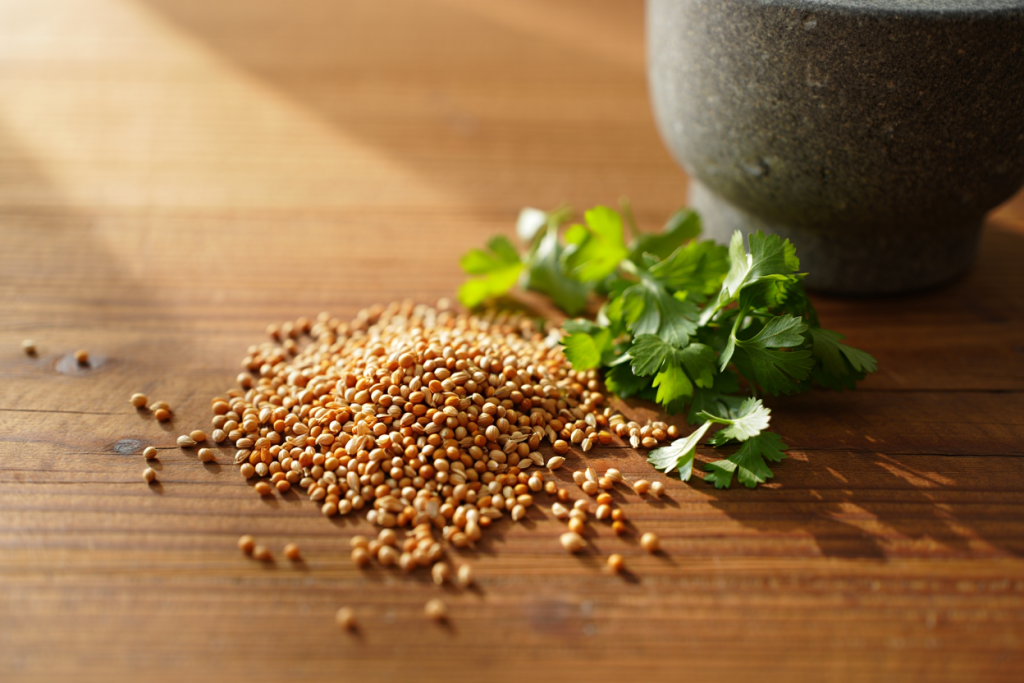
Coriander seeds (the dried fruits of the Coriandrum sativum herb) are a staple spice in kitchens worldwide. They are prized for a warm, citrusy flavor that brightens curries, stews, pickles, and baked goods. Beyond taste, coriander is described as a “fragrant, antioxidant-rich herb” with many culinary uses and health-promoting effects. In other words, coriander seeds deliver both flavor and nutrition. They are especially rich in fiber and minerals like calcium, iron, magnesium and manganese, and also contain beneficial compounds (polyphenols, terpenes) linked to wellness.
A close-up of coriander seeds in a seed tray, highlighting their earthy color and round texture. Coriander seeds add a warm, earthy aroma and texture to dishes. They are commonly toasted to release their flavor before use. Nutritionally, they provide significant dietary fiber and minerals. For example, 100 grams of coriander seeds (about 3.5 ounces) contain several grams of fiber plus notable amounts of calcium, iron, and magnesium. These nutrients help support digestion and metabolic health. Coriander seeds also contain trace B-vitamins and antioxidants that may protect cells from damage.
Nutritional Profile of Coriander Seeds
The nutritional profile of coriander seeds is noteworthy. While fresh coriander leaves (cilantro) are very low in calories, the dried seeds are more calorie-dense and fiber-rich. Key nutrients in coriander seeds include:
- Dietary Fiber: Coriander seeds are high in insoluble fiber. Fiber aids gut health, promotes regularity, and may help you feel full.
- Minerals: They are a good source of minerals like calcium (for bones), iron (for blood), magnesium (for muscles and nerves), and manganese (for metabolism).
- Antioxidants: Coriander seeds contain polyphenols and volatile oils (such as linalool) that have antioxidant properties. These compounds can help neutralize free radicals in the body.
In summary, coriander seeds nutrition offers fiber plus minerals that can complement a healthy diet. For example, adding ground coriander to recipes boosts calcium and iron content slightly. (Of course, you don’t eat 100g of seeds in one sitting – even a teaspoon can make a flavorful difference.)
Culinary Uses of Coriander Seeds
Coriander seeds are extremely versatile in the kitchen. Their warm, lemony-spice profile works in many savory and sweet dishes. Common cooking uses include:
- Curries & Spice Blends: Toasted whole or ground, coriander seeds are a key ingredient in Indian curries, garam masala, ras el hanout, and other spice mixes. They add depth and a subtle citrus note.
- Pickling & Marinades: Whole seeds lend their aroma to pickles, chutneys, and brines. They infuse pickled vegetables and sauces with a warm, sweet-spicy flavor.
- Roasted and Baked Goods: Coarsely ground coriander can flavor bread, crackers, or roasted vegetables. It pairs well with other spices like cumin, fennel, and paprika.
- Soups & Stews: Simmering coriander seeds in broths or bean dishes adds a soft sweet-woody undertone. They are often added to lentil soups and stews for extra aroma.
Whole coriander seeds can be toasted briefly in a dry pan until fragrant before grinding. Warming the seeds releases their oils and enhances flavor. After toasting, you can grind them or leave them whole. One tablespoon of ground coriander is roughly equivalent to 5–6 whole seeds.
Coriander Seeds vs Cumin Seeds
Though often paired in recipes, coriander seeds vs cumin seeds have distinct tastes. Cumin’s flavor is pungent, earthy and “warm”, while coriander seeds offer a milder, citrusy and slightly sweet profile. For example, Moroccan cuisine might use both in a tagine, whereas Mexican salsas favor cumin alone. In short, cumin is sharper and more savory, whereas coriander adds a bright, lemony note. Both seeds complement each other and are staples in curry powders, chili seasonings, and many spice blends.
Health Benefits of Coriander Seeds
Many of the reputed coriander seeds benefits come from their antioxidants and bioactive compounds. Research suggests coriander may support the heart, brain, gut, and more. Some notable effects include:
- Digestive Health: Coriander seeds have been used traditionally to soothe the stomach. Modern studies support this – for instance, an 8-week trial in people with irritable bowel syndrome (IBS) found that a coriander-based herbal remedy significantly reduced bloating, pain, and discomfort compared to placebo. Coriander seed oil also appears to speed healthy digestion and relieve gas. Many people sip coriander seed tea (steeping seeds in hot water) to ease indigestion and heartburn. Overall, coriander seeds for digestion is a time-tested use that may indeed reduce digestive upset.
- Weight and Metabolic Support: Preliminary research indicates coriander may aid weight management. Animal studies show coriander polyphenols can reduce cholesterol and blood fats. For example, rats fed a high-fat diet experienced lowered LDL cholesterol when given coriander seed extract. In a human trial, volunteers who took coriander seed powder saw decreases in blood sugar and cholesterol levels – and all participants lost a small amount of weight over two months. The fiber in coriander seeds may also promote fullness. While coriander is not a magic bullet for weight loss, its metabolic benefits (cholesterol and glucose lowering) can support a healthy diet.
- Heart Health: Coriander appears to have heart-protective effects. It may help lower LDL (bad) cholesterol and raise HDL (good) cholesterol. In addition, coriander may modestly lower blood pressure. The net effect is a reduced risk of atherosclerosis. Indeed, spice-rich diets that include coriander are associated with lower rates of heart disease.
- Skin and Anti-aging: Topically, coriander has soothing properties. It was traditionally applied for rashes and dermatitis. Studies show that antioxidants in coriander extract can protect skin cells from UV damage and oxidative aging. One rodent study suggested coriander antioxidants slow age-related skin damage. While human evidence is limited, many people report using coriander leaf or oil to calm acne or inflammation. In summary, coriander seeds for skin may help guard against sun damage and inflammation. (As always, apply with care and do a patch test first!)
- Antibacterial and Anti-inflammatory: The essential oils in coriander (dodecenal, linalool, etc.) have antimicrobial effects. They can inhibit bacteria like Salmonella and Staph in lab tests. Coriander also has anti-inflammatory compounds, which may help reduce swelling and pain. For example, animal studies suggest coriander extracts may protect brain nerves and reduce inflammation. These properties contribute to its traditional use in fighting infections and easing joint pain.
- Blood Sugar and Diabetes: There is evidence coriander helps regulate blood glucose. In diabetic rat studies, coriander seed extract lowered blood sugar and HbA1c levels in a dose-dependent manner. The seeds’ antioxidants seem to improve insulin function. This aligns with folklore: in some cultures, coriander seed tea is taken for blood sugar control. (If you have diabetes, note that coriander seeds might enhance the effect of your medication, so use with caution.)
In short, coriander seeds benefits span many systems: digestive comfort, metabolic support, skin protection, and more. Including this spice in your diet (in cooking or teas) can be a flavorful way to boost wellness.
Coriander Seed Tea
Making coriander seeds tea (sometimes called dhania water or khatta jal) is easy: soak or simmer whole coriander seeds in hot water for 5–10 minutes, then strain. This soothing brew is used in Ayurveda and folk medicine to aid digestion and reduce acidity. Drinking warm coriander seed tea on an empty stomach may help “cleanse” the gut and reduce bloating. Some sources also suggest it may help lower blood sugar over time. While scientific data on homemade tea is scarce, the plant compounds are the same as those in the seeds, so benefit cautiously from their effects. Try infusing a teaspoon of seeds per cup and enjoy it as a gentle digestive aid.
Potential Side Effects of Coriander Seeds
Coriander seeds side effects are uncommon but can occur, especially if consumed in very large amounts or by sensitive individuals. Potential issues include:
- Allergic Reactions: Some people may be allergic to coriander. Symptoms can include skin rash, itching, swelling, or respiratory symptoms. If you have allergies to related plants (like carrot or celery), be cautious.
- Digestive Upset: Paradoxically, eating very large quantities can cause mild digestive discomfort (bloating, diarrhea) in some users. However, normal culinary amounts are generally well tolerated.
- Photosensitivity: Coriander oil can make the skin more sensitive to sun; excessive topical application or high doses might increase sunburn risk.
- Blood Sugar Effects: Because coriander can lower blood sugar, people with hypoglycemia or on diabetes drugs should monitor levels to avoid low sugar.
- Pregnancy: In medicinal doses, coriander may affect hormones or menstruation, so pregnant or nursing women should use only food amounts.
Overall, coriander seeds side effects are rare at culinary doses. Most people use them safely in cooking. If you notice any unusual symptoms after eating coriander (like rash or itching), discontinue use and consult a doctor.
FAQs
Q: What are the main uses of coriander seeds in cooking?
A: Coriander seeds are used whole or ground. Whole seeds are often toasted then added to curries, stews, pickles, and bread doughs. Ground coriander is common in spice blends like curry powder or taco seasoning. The flavor pairs well with cumin, turmeric, and garlic.
Q: How many coriander seeds should I consume for health benefits?
A: There’s no single “prescribed” dose. In cooking, people typically use ¼–1 teaspoon (1–5 grams) per dish. For a tea or remedy, 1–2 teaspoons of seeds steeped in water is common. Most health benefits come from regular culinary use rather than mega-doses. Always start with small amounts to see how your body reacts.
Q: Can coriander seeds really help with weight loss?
A: Coriander seeds may support weight loss indirectly. Some studies found that adding coriander powder to the diet helped reduce cholesterol and modestly improve blood sugar, and participants lost a little weight over weeks. Its high fiber may also increase satiety. Still, coriander seeds for weight loss should be viewed as a complementary aid, not a standalone solution. Healthy diet and exercise are crucial.
Q: Is it safe to drink coriander seed tea daily?
A: Drinking coriander seed tea in moderation (1 cup per day) is generally safe for most people and may aid digestion. However, excessive intake might affect blood sugar or interact with medications. If you have any chronic conditions, consult your doctor before making it a daily habit.
Q: Are coriander and cilantro the same thing?
A: They come from the same plant (Coriandrum sativum), but refer to different parts. Cilantro is the leafy herb, while coriander in the U.S. usually means the seeds. The flavor is different too: cilantro leaves are bright and citrusy, coriander seeds are warm and spice-like.
Q: Do coriander seeds have benefits for skin and hair?
A: Coriander seeds contain antioxidants (like linalool) that may help protect skin from aging and sun damage. Some people use diluted coriander oil on the scalp to promote shine or reduce dandruff. However, scientific evidence for hair benefits is limited. The seeds do contain small amounts of vitamin C and other nutrients that could indirectly support healthy skin and hair if included in the diet.
Q: Can eating coriander seeds improve digestion?
A: Yes. Traditional use and modern studies agree that coriander can ease digestive discomfort. The seeds contain compounds that can help relax intestinal spasms and reduce gas. In one study, IBS patients taking coriander extract experienced less bloating and pain. Sipping coriander tea is also a common remedy for indigestion.
Overall, incorporating coriander seeds into your diet—whether in cooking or as a tea—can spice up your meals and offer a range of health benefits. Enjoy experimenting with this ancient spice, and share your favorite recipes or tips on social media to spread the flavor!