Choosing the best time to travel to Machu Picchu can make or break your experience. This Inca citadel sits at 2,430 m (7,970 ft) above sea level in a tropical cloud-forest – meaning its weather swings dramatically. There are two main seasons: dry (May–Sept) and wet (Nov–Mar). The dry winter months bring clear skies, while the wet summer months bring rain, mist, and lush greenery. Planning around these seasons affects crowds, costs, and conditions for hiking or photography. In this guide we break down each period, plus special interests (budget travel, Inca Trail hiking, sunrise photography, etc.), so you can pick the perfect time to visit Machu Picchu.
Machu Picchu’s Climate and Seasons:
Machu Picchu’s unique location – high in the Andes and close to the Amazon basin – creates a subtropical highland (cloud forest) climate. Although temperatures are moderate year-round (daily highs in the 60–70s °F / 20s °C), conditions change fast. Cool, clear mornings (40–50 °F) often give way to afternoon clouds and rain. Key factors include:
- High elevation: At nearly 8,000 ft, nights are cold and days mild.
- Orographic rain: Mountains force moist Amazon air upward, causing afternoon showers in the wet season.
- Microclimates: Within the site, terraces at different elevations can be foggy or clear simultaneously, giving photographers dramatic misty effects.
Overall, Machu Picchu has a dry season (May–September) and a rainy season (November–March). April and October are transition months between these extremes. Understanding this cycle is key. Travelers should plan layers and rain gear at any time, since even dry months can have sudden showers, and wet months often clear by late morning.
- Altitude Sickness: Remember that Cusco and the Sacred Valley share similar altitude (Cusco ~11,150 ft). Many travelers acclimate in Cusco (11,152 ft) for a couple of days before the Machu Picchu trek.
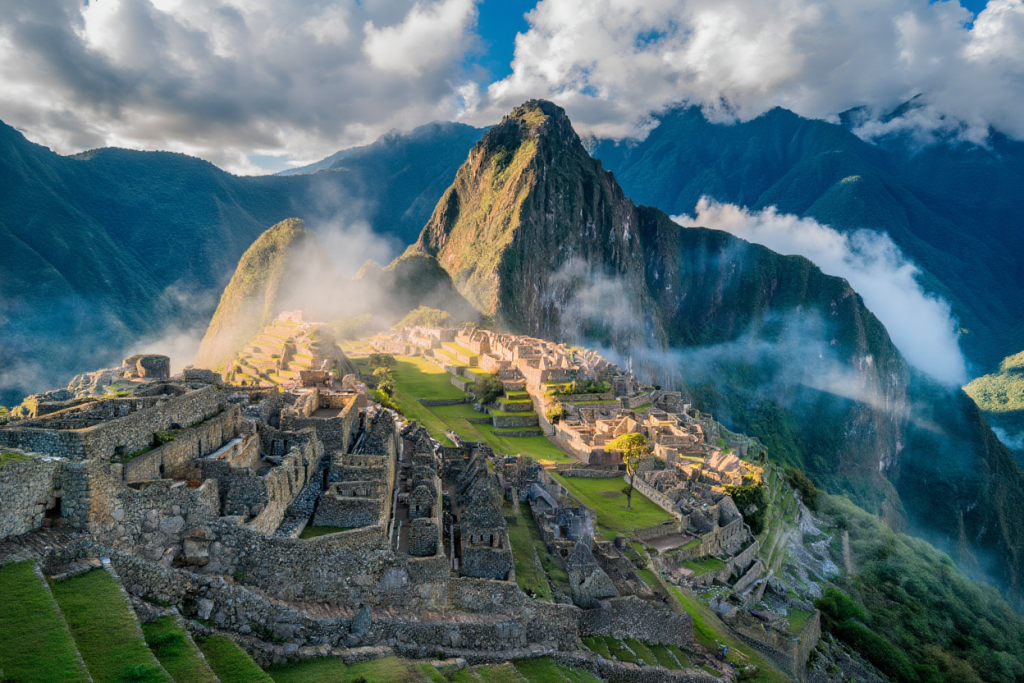
Machu Picchu in the dry season with clear skies.
Dry Season (May–September):
The dry season in Machu Picchu runs roughly mid-May through September. This is traditionally the peak travel season because of minimal rain, stable weather, and long sunny days.
- June–August (Peak Season): These months offer the most reliable weather – clear blue skies and almost no rain. Daytime temperatures reach ~70–75 °F (21–24 °C) with low humidity, ideal for trekking and photography. However, crowds and costs hit their highest levels: daily visitors can exceed 2,000, hotels and guides often charge 50–100% more, and train/intra-city transit must be booked months in advance. If you go in peak season, reserve your tickets and tours 6+ months out.
- May & September (Shoulder Season): These shoulder months balance good weather with fewer crowds. May benefits from the recent rains: the ruins and surrounding peaks are lush green and visibility is crystal clear. Tourist numbers are still lower, so you often find moderate crowds and slightly cooler temps. September is at the end of the dry spell, with very little rain. Tourist numbers begin to fall as South American school vacations end, and wildflowers bloom in the valley. Prices start to drop toward shoulder rates. In short, May and September often combine near-perfect hiking weather with better prices and room to breathe (both literally and figuratively).
- What to Pack: In dry-season hikes expect sunny days but cold nights. Layered clothing is a must. According to guides, pack base layers and a warm jacket for dawn, plus sun protection (hat/sunscreen) for midday. The air is drier, so rehydrate often on trail.
Transitional Months (April & October):
The months of April and October bridge the wet and dry seasons, and each has unique perks. These periods are often overlooked, but can be strategic times to visit.
- April (Emerging from Rains): In early April, heavy rain is still common, but by mid-April precipitation drops off. This yields landscapes at their peak green and vibrant. Visitor numbers are moderate – higher than Jan–Mar but far below summer peaks – and tour prices are still reasonably low. Some cloudy or misty mornings linger, giving dramatic photo opportunities amid clearing skies. If you’re flexible with weather, April offers good value: expect 3–4 rainy days per month but usually improving weather as the month progresses.
- October (Approaching Rains): October sees much of the summer’s dryness, with only the beginnings of rainy season by month’s end. Early October often has excellent hiking weather – warm days, cool nights, and fewer crowds as peak season ends. Inti Raymi (the June Festival of the Sun in Cusco) has passed, so most domestic travelers have left. October fares benefit from low-season discounts while still enjoying long dry days. By late October the odds of rain increase slightly, so plan for rain gear if visiting late in the month.
Both April and October are called shoulder seasons. They’re great choices if you want a compromise between the extremes – moderate weather, smaller crowds, and better prices than in summer peaks. Many travel experts actually prefer these months for the combination of clear views without full summer crowds.
Rainy Season (November–March):
The wet season (sometimes called “shoulder” or “low” season) runs roughly November through March. This is when Machu Picchu’s environment becomes dramatically lush – but with daily afternoon rain almost guaranteed.
- Climate: From late November onward, rainfall increases sharply. December, January, and February see the heaviest rains (often >6 inches in January). Wet-season days often start clear but have rain in the afternoon. Humidity is very high (80–90%), and some trails become muddy. The Inca Trail is closed in February for maintenance, so no hiking then. Many visitors avoid raincoats by scheduling morning visits and dedicating afternoons to indoor markets or scenic train rides.
- Advantages: Fewer tourists and big savings are the main draw. Daily visitors can drop to below 1,000. Hotels and tour operators slash prices up to 40–60%. The landscape rewards those who come: waterfalls are at their peak flow, terraces glow deep green, and clouds weaving through the ruins create a mystical atmosphere. Photographers sometimes prefer rainbows and mist – wet season shots can be more dramatic than clear-blue skies.
- Disadvantages: Afternoon downpours are routine. Plan for 2–4 hours of rain most days, which can dampen extended hikes. Some valley roads and trails get slippery, and landslides occasionally delay trains. Sightlines on foggy days can be poor – you may see Machu Picchu briefly through the clouds. If you want a full panoramic view, mornings are your best bet.
- Tips for Rainy Season Travel: Book early entrance tickets (6:00–8:00 AM slots) for dry morning light. Bring top-quality rain gear (waterproof boots, jackets) and pack extra dry socks. Schedule backup days for key activities (e.g. if it rains out an early visit, try again next morning). Embrace indoor plans (museums, markets) in the late afternoon. The downside – constant rain – can be minimized with flexibility. Many seasoned travelers say a little rain is “not as bad as you might think,” since much of it falls overnight or late afternoon.
Photographers love Machu Picchu’s golden-hour glow. Arriving before 6 AM (shown above at sunrise) captures the citadel as mist lifts over the terraces.
Photography, Sunrise Tours, and Highlights:
Many travelers time their Machu Picchu trip for sunrise or photography. The dry season (May–Sept) naturally provides the clearest light, but timing of day is just as important as time of year.
- Sunrise Visits: For a stunning dawn scene, catch the first shuttle or bus (around 5:30–6:00 AM). Entering Machu Picchu at 6 AM gives you the sunrise light on Huayna Picchu and the Temple of the Sun. Morning mist dissipates into soft gold, revealing terraces and temples in a warm glow. These 6–8 AM slots are limited, so reserve them well in advance. (Tip: sunrise times vary by season; around June the sun rises before 7 AM, while in December it’s closer to 6 AM.)
- Golden Hours: Late afternoon (3–5 PM) is another photo-friendly period. The western ruins catch rich amber light as crowds thin. If morning slots sell out, book a late afternoon entrance and stay until closing to capture the “golden hour” backlit on the terraces.
- Best Season for Photos: Clearly, the dry season’s crisp skies make every shot vivid. However, dramatic cloud plays in rainy season yield unique images – swirling fog, rainbows, and saturated colors. If you chase mood and atmosphere, plan a day in December or January with extra patience (and an umbrella).
- Packing for Photos: Bring a wide-angle lens for whole-site vistas, and a zoom or tripod for detail work. A polarizing filter can cut glare on sunny days. In winter mornings (June–July) expect frost or dew on the grass – waterproof boots are helpful. Above all, be ready for quick changes: an hour of calm light can turn into cloud cover, so keep your camera accessible.
Hiking & The Inca Trail:
For many, the highlight of a Machu Picchu trip is hiking the famous Inca Trail. Other popular treks (Salkantay, Lares, Inca Jungle, etc.) also lead to Machu Picchu. In all cases, timing is crucial for trail conditions and permits.
- Inca Trail: This classic 4-day trek requires a permit. The Inca Trail is open May through October, with June–August being the most reliable weather. July is the busiest month on trail (and at the ruins), so many hikers prefer May, early June, or September to avoid crowds and still enjoy dry conditions. Note that February is the only month the Inca Trail closes for annual maintenance. Permits often sell out months in advance for peak dates, so book early if possible.
- Other Treks: If the Inca Trail is full or closed, alternative routes run year-round. The Salkantay Trail (4–5 days) is very popular and also best hiked in dry season. The Lares Trek (3–4 days) is accessible year-round but can be muddy Nov–Mar. All hikers should start early to avoid afternoon showers.
- Best Time for Trekking: In short, follow the dry season. Aim for May–September to ensure trails are mostly dry. April and October are viable with some flexibility – they’re good shoulder months if you can handle occasional rain. Always carry layers and rain gear, as Andean weather is unpredictable regardless of season.
- Altitude Acclimatization: Remember, you’ll begin treks in Cusco or the Sacred Valley (11,000+ ft). Spend 1–2 nights in Cusco acclimating before you hike or tackle Machu Picchu.
Tours, Transportation & Budget Travel:
Machupicchu.org notes that the rainy season can be a “budget paradise”. Costs drop dramatically in the off-season:
- Cheap Season: November–March sees 40–60% lower prices on hotels and guides. Shoulder months (April, October, and even late September) also offer discounts. Peru travel companies often run deals to fill space. If price is your primary concern, the early rainy season is best – just be prepared for rain.
- Peak Season Tours: In dry season (especially June–Aug), tours and shuttles book up quickly. Group excursions (including Inca Trail hikes) often cost more. Booking 4–6 months ahead is wise. Intrepid Travel notes that June–August brings “crisp skies and plenty of sunshine” but warns to book ahead.
- Traveling to Cusco: Flights to Cusco are busiest around June–August and major Peruvian holidays (Inti Raymi in June, July 28 Independence Day). For best airfare and hotel rates, consider April–May or September–October.
- Tours & Guides: All Machu Picchu tours run year-round, but company schedules may thin in low season. If you prefer a guided tour, note that many tour operators favour April–May and September–November for a balance of weather and crowding.
Overall, best time to travel to Machu Picchu on a budget tends to be late April, October–November, or mid-Dec-Feb. Prices are lower and crowds are smaller, as long as you can handle a little rain.
Seasonal Comparison Checklist:
- Dry Season (May–Sept): Clear skies & perfect hikes. Most recommended for sun; ideal for trekking and photography. But expect the highest crowds and prices. Inti Raymi (late June) and other festivals cause huge spikes.
- Shoulder Months (Apr & Oct): Mixed conditions – still mostly dry but with occasional rain. These months often have good weather with fewer tourists and mid-range prices. Great for flexible travelers.
- Wet Season (Nov–Mar): Rainy afternoons are typical. Fewer tourists and cheaper costs. Great if you want solitude and green scenery. Not ideal if you need guaranteed sunshine, but early mornings are often clear.
- Hiking/Inca Trail: Available May–Oct (closed Feb). Best months June–Aug for conditions, but consider May or Sept for weather + fewer hikers.
- Photography/Sunrise: Early morning visits (6–8AM) capture sunrise glow. Dry season (May–Sept) has clearest light, but rainy season yields atmospheric fog/mist photos.
- Budget Travel: April, October–November, and Dec–Feb see the lowest prices. These months avoid the peak summer pricing.
- Cusco Connection: Weather in Cusco mirrors Machu Picchu – the dry season is also peak in Cusco. Expect crowds during major Cusco festivals (Inti Raymi in June–July, Cusco Day in August). Outside of festival periods, Cusco is calmer in Apr–May and Sept–Oct.
Frequently Asked Questions:
When is the best time to visit Machu Picchu?
The best time depends on your priorities. For reliable weather and classic views, visit in the dry season (May–September), especially June–August. For a quieter, more budget-friendly trip, consider the shoulder months (April, October) or even the wet season (Nov–Mar) when crowds thin out. Many experts suggest April–May and September–November as “sweet spots” – fairly good weather with fewer tourists.
What is the difference between the dry season and wet season?
Dry season (May–Sept) means sunny mornings and almost no rain. Trails are drier and views are clear. Wet season (Nov–Mar) brings afternoon showers and heavy cloud cover. The landscape becomes lush and waterfalls flow strongly, but visibility can be reduced. The key difference: dry = clear skies & crowds; wet = rain & discounts.
Is February a bad time to go to Machu Picchu?
February is the worst month for the Inca Trail – it is closed for maintenance. Machu Picchu itself remains open, and crowds are extremely low, but expect heavy rain. If you don’t need the Inca Trail, February offers cheap rates and mystical cloud scenes. Otherwise, plan around February.
When should I go for Machu Picchu sunrise views?
Aim for early morning tours (6:00–8:00 AM). This timing, especially in the dry season, gives you soft golden light on the ruins as fog dissipates. Many travelers book the earliest permits just for the sunrise effect. If you can’t manage 6 AM, the late afternoon (2–5 PM) is another good window for warm light.
When are tours and permits the busiest?
High season (June–Aug) is extremely busy – tickets (including mountain hikes like Huayna Picchu) can sell out 6 months ahead. Major holidays (Inti Raymi in late June, Peruvian Independence Day in July) also spike local tourism. If you want smaller crowds, skip peak summer weekends.
When is the cheapest time to visit Machu Picchu?
November to March (rainy season) offers the biggest savings on flights, hotels, and tours. Shoulder months (April, October–November) also have moderate prices. Booking ahead even in low season is wise, but you’ll generally pay less than in June–August.
Is Machu Picchu open year-round?
Yes, Machu Picchu is open all year. Only the Inca Trail has a brief closure in February. Seasonal regulations (like daily visitor caps of ~5,000 people) apply year-round, so plan early.
Do I need to worry about altitude when visiting?
Yes, Machu Picchu (7,970 ft) and nearby Cusco (~11,152 ft) are high. Spend a day or two in Cusco to acclimatize. Drink plenty of water, and consider altitude medication if you feel severe symptoms.
Conclusion & Tips:
In summary, the best time to travel to Machu Picchu depends on your goals. If perfect weather and clear views are your priority, plan for the dry season (especially June–August). For fewer crowds and lower costs, try the shoulder months (April/October) or even the rainy season (November–March). Always book your tickets, train, and tours well in advance for high-demand periods. Pack for cold mornings and variable weather year-round (layers, rain gear) because mountain weather can change by the hour.
No matter when you go, Machu Picchu is magical. Whether it’s shrouded in morning mist or glowing under a summer sun, this ancient Inca city offers a once-in-a-lifetime experience. Share this guide with friends planning a Peruvian adventure, and comment below with your Machu Picchu travel tips! Safe travels and Buen viaje!