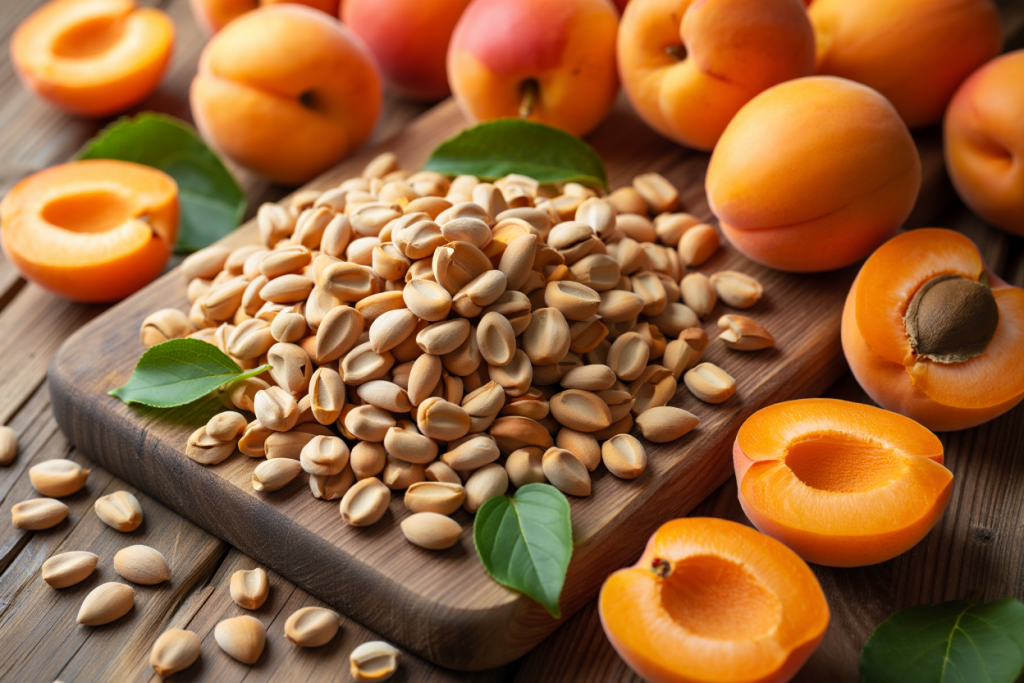
Fresh apricot fruits (Prunus armeniaca). The edible kernels (apricot seeds) inside the hard pit are rich in amygdalin (vitamin B17) and other nutrients.
Apricot seeds (also called apricot kernels) are the edible seeds inside the pit of the apricot fruit. These small, almond-like kernels contain amygdalin, a plant compound often referred to as “vitamin B17”. In traditional medicine apricot seeds have been used for nutrition and health, and today they are marketed for benefits ranging from cancer support to skincare. This article examines the full nutritional profile of apricot seeds, their claimed health benefits, and important safety and dosage guidelines. We’ll cover apricot seeds’ vitamin B17 content, uses (including apricot seed oil for skin and hair), potential side effects and toxicity, and evidence-based facts to help you make informed choices.
Nutritional Profile of Apricot Seeds
Apricot seeds are nutrient-dense. They contain healthy fats, plant protein, fiber, vitamins, and minerals. For example, a serving of bitter apricot kernels (about 3 seeds, roughly 10 calories) is approximately 53% fat, 24% carbohydrates, and 24% protein. The fat is mostly unsaturated (including oleic and linoleic acids), and the carbohydrate includes some fiber. Apricot seeds also supply vitamin E and minerals like iron and magnesium.
- Macronutrients: Apricot kernels are roughly half healthy fat and one-quarter protein by calories. The remainder is carbohydrates (mainly fiber), making them filling and energy-rich.
- Vitamin B17 (Amygdalin): A defining nutrient of apricot seeds is amygdalin, often called vitamin B17. Amygdalin content varies, but it is present in significant amount, giving apricot kernels their reputation. (Note: “vitamin B17” is not an official vitamin.)
- Vitamins & Minerals: Apricot seeds contain vitamin E and B vitamins in small amounts, plus minerals like calcium, potassium, and iron. They also have antioxidants (phenolic compounds) that may offer health-promoting effects.
These nutrients contribute to general health: protein helps build tissue, healthy fats support heart and cellular health, and fiber aids digestion. The amygdalin (B17) in apricot seeds is controversial (discussed below). But as a food, apricot kernels are comparable to other tree nuts in nutrient density.
Apricot Seeds and Vitamin B17 (Amygdalin)
Apricot seeds are best known for amygdalin, the cyanogenic glycoside some call “vitamin B17.” In the body, amygdalin can break down and release hydrogen cyanide. Proponents of apricot seeds claim B17 kills cancer cells, but mainstream science strongly disputes this. Medical experts emphasize that vitamin B17 is not a true vitamin and that there is no solid evidence apricot seed amygdalin cures cancer. In fact, Amygdalin is found in many fruit kernels (peach, bitter almond, etc.), and only large amounts pose toxicity.
Health agencies like the FDA and the European Food Safety Authority (EFSA) have evaluated apricot kernels. Decades ago, the FDA banned laetrile (a synthetic form of amygdalin) for cancer therapy in 1979 after reports of cyanide poisoning. More recently, the FDA warned that some apricot seed products sold online contained dangerously high amygdalin levels. The European EFSA issued a risk assessment: “Eating more than three small raw apricot kernels…in a serving can exceed safe levels.” This underscores that amygdalin in apricot seeds must be respected as a potential poison.
Importantly, clinical studies do not support cancer treatment claims. Laboratory tests (in petri dishes) sometimes show amygdalin killing cancer cells, but human trials have found no benefit. A Cochrane review concluded: “claims that laetrile or amygdalin have beneficial effects for cancer patients are not currently supported… [and] there is a considerable risk of serious adverse effects from cyanide poisoning”. In summary, while apricot seeds contain B17, this compound is unproven and potentially hazardous.
Health Benefits of Apricot Seeds
Aside from amygdalin hype, apricot seeds do offer some general nutritional benefits. They provide plant-based protein, fiber, and healthy fats, which can support overall diet quality. Anecdotal and preliminary research suggest a few possible health effects, though evidence is limited:
- Digestive Health: The fiber in apricot seeds (and the surrounding pit) can aid digestion and regularity. Dietary fiber also supports gut health and blood sugar control.
- Heart Health: Rich in monounsaturated fats (like oleic acid), apricot kernels may help maintain healthy cholesterol. Indeed, one source notes they are a “good source of heart-healthy fats” which help regulate cholesterol.
- Blood Pressure: An old small study found that eating apricot kernels significantly lowered blood pressure (over 28% reduction in systolic) in adults. However, this study lacked controls and is not conclusive. More research is needed before claiming apricot seeds treat hypertension.
- Pain Relief: Animal studies suggest amygdalin might have anti-inflammatory or pain-relieving effects, but human evidence is lacking.
- Antioxidant Support: Apricot seeds contain antioxidants (vitamin E, polyphenols, flavonoids) that combat oxidative stress. Antioxidants are generally linked to reduced risk of chronic diseases.
Overall, while apricot seeds have nutritious components, most of their claimed health benefits remain unproven. They can be part of a healthy diet (in moderation), but should not be relied on as a cure-all.
Apricot Seed Oil for Skin and Hair
Apricot seed oil (cold-pressed from apricot kernels) is widely used in cosmetics and skincare. It’s rich in vitamin E, oleic acid, and linoleic acid, making it a great natural moisturizer. For example, apricot kernel oil’s high oleic acid and vitamin E content help hydrate and soften skin. Its antioxidants protect skin cells from free-radical damage, reducing the appearance of fine lines and wrinkles. The fatty acids in apricot oil also improve skin elasticity, keeping skin firm and youthful.
For hair, apricot oil is prized for strengthening and nourishing. It can help reduce hair breakage and promote healthy growth. The fatty acids penetrate the hair shaft, boosting moisture and shine. Many shampoos and hair treatments include apricot oil for scalp health and hair conditioning.
Key skincare/hair benefits:
- Deep Moisturizer: Restores dry skin and improves barrier function.
- Anti-Aging: Antioxidants in the oil help prevent premature aging and wrinkles.
- Elasticity: Keeps skin supple and helps reduce stretch marks or sagging.
- Hair Nourishment: Strengthens roots, reduces breakage, and promotes sheen.
Overall, apricot seed oil is considered very safe and beneficial for cosmetic use. (It’s non-greasy and non-comedogenic.) Many natural and organic beauty products recommend apricot kernel oil for skin and hair due to these properties.
Apricot Seeds for Cancer? The Evidence
“Apricot seeds (vitamin B17) cure cancer” is a popular claim on social media, but medical experts disagree. No rigorous study shows that eating apricot seeds prevents or cures cancer. In fact, major health organizations caution against this use. Clinical trials in humans have found no evidence that laetrile/amygdalin (from apricot kernels) improves cancer outcomes. For example, a controlled trial published decades ago showed no difference between laetrile and a placebo. The Memorial Sloan-Kettering Cancer Center and other agencies state that laetrile is not effective and is potentially dangerous.
Modern reviews and experts confirm this lack of benefit. The National Cancer Institute and Cancer Research UK note that laetrile is unproven and that any anecdotal “success” is unsupported. As already mentioned, a Cochrane review bluntly found laetrile/amygdalin offers no cancer benefit and carries risk of cyanide poisoning. In summary, trusting apricot seeds for cancer treatment is unsafe and unsupported by science. Patients should never replace evidence-based cancer therapies (surgery, chemo, etc.) with apricot seeds.
Dosage and Safe Consumption
If you choose to eat apricot seeds, it is crucial to limit the amount to avoid toxicity. There is no official “dose” of vitamin B17, but food safety authorities give clear guidance: just a few kernels per day, maximum. The European Food Safety Authority warns that “eating more than three small raw apricot kernels… in a serving can exceed safe levels” of cyanide. In concrete terms, about 3 small kernels (≈370 mg) is the upper limit for an adult in one sitting. Even one kernel can exceed safety for young children.
- For adults: No more than 2–3 small kernels per day. Even that is pushing it. Some health sites errantly recommend 10 or more, but that greatly increases risk.
- For children: Avoid entirely. A single small kernel may be dangerous for toddlers.
- Method of consumption: Some sources say crushing or brewing kernels may release more cyanide, so oral ingestion is the risky method. (Note: any preparation still liberates cyanide.)
- Apricot Kernel Oil: If using apricot kernels for oil, the oil itself contains negligible amygdalin (it is removed during pressing) and is generally safe. But the oil has none of the B17 that raw kernels have.
In summary, treat apricot seeds like a potent supplement, not a snack. Use only very small amounts (1–3 kernels), no more than a few times per week. Always swallow them whole or ground, not raw chewing of large amounts. Even low doses can accumulate cyanide, so caution is advised.
Side Effects and Toxicity of Apricot Seeds
The main risk of apricot seeds is cyanide poisoning from their amygdalin. Even modest excess can cause acute toxicity. Symptoms begin with mild to moderate effects: headache, nausea, vomiting, dizziness, weakness, and rapid breathing. Skin may flush or turn blue. In severe cases (high intake), cyanide blocks cellular respiration leading to confusion, seizure, loss of consciousness, cardiac arrest and even death.
Common symptoms of apricot seed poisoning include: nausea, vomiting, stomach pain, breathing difficulty, weakness, and headaches. This can escalate to liver and nerve damage, coma or fatal outcomes if untreated. In reported cases, people who ate large amounts of raw kernels became severely ill or died from cyanide toxicity.
Even with moderate intakes, some people may experience subacute symptoms. For example, a study noted lung cancer patients who took apricot kernel supplements suffered from severe weakness, stomach upset and low blood pressure. The danger is real: as one oncologist said, “You don’t want to take something not proven to reduce cancer and known to have toxicity”.
Key point: Treat apricot kernels with caution. If you feel any unusual symptoms after eating them, seek medical attention. Do not mix apricot seeds with vitamin C or other substances that can increase cyanide release (citrus, beans, carrots, etc.), as noted by experts.
Frequently Asked Questions (FAQs)
- What are apricot seeds and vitamin B17? Apricot seeds (kernels) are the edible part inside the apricot pit. They contain amygdalin, often labeled “vitamin B17,” though it’s not a true vitamin. Amygdalin can release cyanide when digested.
- Are apricot seeds good for you? In small amounts, they provide protein, fiber and healthy fats. However, their touted special benefits (like cancer cure) are not proven, and too many seeds can be harmful. Use sparingly if at all.
- Can apricot seeds treat or prevent cancer? No clinical evidence supports that. Most studies find no anticancer effect in humans and highlight a risk of cyanide poisoning. Health authorities advise against using apricot seeds as a cancer therapy.
- How many apricot seeds can I eat safely? Very few: authorities suggest no more than 2–3 small kernels at a time. Eating more than 3 kernels in one serving can exceed safe cyanide levels for adults. For children, even 1 kernel is risky.
- What are the side effects of apricot seeds? Side effects are due to cyanide: nausea, vomiting, headache, dizziness, low blood pressure, and in severe cases, neurological damage or death. If you experience any symptoms after consumption, stop use and seek help.
- Is apricot seed oil safe? Yes. Apricot kernel oil (pressed from seeds) contains little to no amygdalin. It’s safe and beneficial for skin and hair, providing vitamin E and fatty acids.
Conclusion: Apricot seeds are a natural source of nutrients including a compound often called vitamin B17 (amygdalin). While they can be included in a balanced diet for their protein, fiber and healthy fats, all health claims should be viewed skeptically. There is no proven benefit of apricot seeds for serious conditions like cancer. Moreover, consuming too many kernels can cause dangerous cyanide poisoning. If you choose to use apricot seeds, do so in very small amounts and follow safety guidelines. Always consult a healthcare professional before trying them for medicinal purposes.
Feel free to share this article if you found it helpful, and leave a comment below with your thoughts or questions about apricot seeds. Stay informed and use apricot seeds wisely for best health and safety!