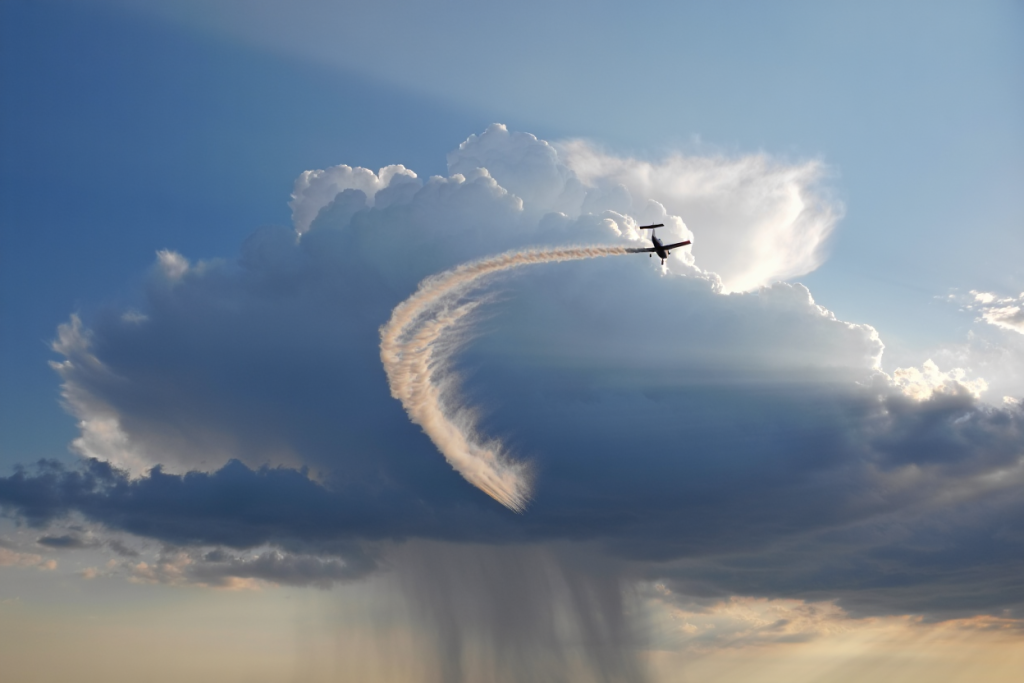
Cloud seeding is a weather modification method that disperses substances (often silver iodide or salt) into clouds to stimulate rainfall or snowfall. It effectively provides extra ice nuclei (condensation particles) to natural clouds, causing them to produce precipitation that they might not otherwise release. Often nicknamed “artificial rainmaking,” cloud seeding has been applied worldwide since the 1940s to enhance water supplies, fight droughts, and even reduce hail damage in storms.
Interest in cloud seeding has grown in an era of water scarcity and climate change. Proponents point to studies suggesting increased local precipitation from seeded clouds, while critics note that outcomes can be modest. For example, a U.S. government review found that cloud seeding typically yields only small gains (often 0–20% more rain) over natural levels. Nonetheless, governments and farmers continue to deploy it as a tool for weather control.
In this comprehensive guide, we explain the cloud seeding process step by step, including the technology and chemicals used, and review notable historical and recent experiments. We also examine the benefits of cloud seeding (such as drought relief and higher water yields) and its disadvantages (environmental concerns, cost, etc.). This article covers key topics like cloud seeding effectiveness, cloud seeding cost, and regional examples (for instance, cloud seeding in the U.S. and global programs). By the end, you’ll understand how cloud seeding makes rain and what the scientific and practical debates are around it.
What is Cloud Seeding?
Cloud seeding is a weather modification technique that aims to increase precipitation by seeding clouds with tiny particles. The goal is to induce rain or snow from clouds that might otherwise produce little or no precipitation. Essentially, operators add ice nuclei or water-attracting particles to improve a cloud’s efficiency. These “cloud seeds” act as catalysts in the cloud, helping droplets to coalesce or ice crystals to form more quickly.
This process has been used worldwide since the 1940s in regions facing water shortages. Proponents view cloud seeding as a potential solution for drought and water supply problems. It is also used for hail suppression and fog dispersal in some areas. For example, ski resorts leverage seeding to intensify mountain snowpack, hydroelectric companies boost spring runoff, and airports use it to clear fog and improve visibility. Farmers and agricultural planners employ cloud seeding to protect crops; seeded storms tend to break up hail into many small stones rather than a few large, damaging ones.
History of Cloud Seeding
The idea of cloud seeding originated in the mid-20th century. In 1946, scientists Vincent Schaefer and Irving Langmuir at General Electric pioneered the concept: Schaefer generated artificial snow by introducing dry ice into a supercooled cloud chamber, and co-worker Bernard Vonnegut discovered that silver iodide crystals could efficiently seed clouds. These experiments proved that tiny particles could induce ice crystal formation in clouds.
Following these breakthroughs, researchers launched many field trials. Early efforts included attempts to modify hurricanes, but results were mixed. One controversial program (Operation Popeye, 1967–1972) was a U.S. military effort in Vietnam to extend the monsoon season via cloud seeding; its reported success led in part to a 1977 international treaty banning weather warfare. During the Cold War, U.S. agencies sponsored water-enhancement experiments (Stormfury, Skywater, etc.) in the Western United States to augment mountain snowfall and replenish reservoirs.
By the 1980s, cloud seeding had shifted to civilian control. Federal research funding declined, and most programs became state and locally managed. In the 2000s and 2010s, modern field campaigns (such as NOAA’s SNOWIE experiment in Idaho) have used rigorous science to evaluate seeding outcomes. Advances in meteorology, drones, and modeling continue to refine cloud seeding technology. Overall, the history of cloud seeding reflects decades of experimentation that have made it a relatively mature (though still evolving) technique for precipitation enhancement.
How Cloud Seeding Works
Illustration of cloud seeding: silver iodide particles dispersed into clouds act as ice nuclei, creating snowflakes or raindrops that enhance precipitation.
Cloud seeding is performed when atmospheric conditions are right. Meteorologists identify suitable clouds (for example, winter mountain clouds rich in supercooled water, or summer thunderstorm clouds with high moisture). Special equipment – typically aircraft or ground-based generators – then releases seeding agents (like silver iodide, dry ice, or salt) into the target clouds. These agents act as nuclei, causing extra ice crystals or raindrops to form.
The cloud seeding process involves a few key steps:
- Select target clouds: Use radar and weather models to find clouds with enough moisture to respond to seeding.
- Deploy seeding agents: Aircraft or ground-based flares release particles of silver iodide, dry ice, or salts into the cloud.
- Nucleation: The particles serve as seeds, inducing additional ice crystal or droplet formation in the cloud.
- Enhanced precipitation: The new ice crystals or water droplets grow and fall to the ground, increasing the cloud’s overall precipitation output.
Modern cloud seeding equipment is highly specialized. Flares often burn precise loads of silver iodide; planes may carry GPS-guided canisters; and some programs even use drones to distribute particles. The goal is always to maximize rainfall or snowfall from existing clouds.
Cloud Seeding Chemicals
The most common seeding agents are:
- Silver Iodide (AgI): The primary ice-nucleating agent. Its crystalline structure triggers snowflake formation in cold clouds.
- Dry Ice (CO₂): Releases fast-cooling CO₂ into clouds, instantly freezing moisture and creating ice crystals (as used in the first 1946 seeding tests).
- Potassium Iodide (KI) & Table Salt (NaCl): Hygroscopic materials used in warm-cloud seeding; they encourage water droplets to collide and grow into rain.
- Other Materials: Under certain conditions, agents like calcium chloride or propane can be used. Researchers are also exploring new techniques (e.g., specialized nanoparticles or drone dispersion) to optimize seeding.
Each agent is selected based on cloud temperature and humidity. For example, AgI is highly effective below freezing, while salts work when droplets are liquid. Operators tailor the seeding chemicals to the storm type to maximize rainfall or snowfall.
Cloud Seeding Experiments and Effectiveness
Assessing cloud seeding’s impact is challenging because weather varies naturally. Nonetheless, many field experiments and projects report modest precipitation gains. Long-term mountain seeding programs (e.g. in Nevada and Australia) have found roughly 10–15% more snowfall from seeded clouds. Overall, reviews indicate rainfall increases on the order of 5–20% when seeding is applied. These figures are averages; some seeded storms show little effect, while others respond strongly.
Satellite and statistical studies similarly suggest a slight boost. For example, Chinese meteorologists reported that their 2022 seeding operations added 8.56 billion metric tons of rain to the Yangtze River basin, though such numbers are difficult to verify independently. In short, cloud seeding can enhance precipitation, but it is not guaranteed. Its effectiveness tends to be clearer in large datasets over many storms rather than in any single event. Therefore, cloud seeding is usually applied as one of several water management tools, not a surefire way to make it rain on demand.
Benefits of Cloud Seeding
- Increased Water Supply: Seeding can help fill reservoirs and aquifers. For example, Nevada studies reported about a 10% boost in snowpack on seeded mountains, meaning more spring runoff. Even small gains mean millions of extra gallons of water for cities and farms.
- Drought Relief: Cloud seeding is used to combat drought. States and countries (e.g. the U.S., China, UAE) initiate seeding campaigns when rainfall is scarce. By inducing even occasional showers, seeding helps ecosystems and agriculture survive dry spells.
- Agricultural Protection: Farmers benefit from additional rain and reduced hail. Experiments show that seeded storms tend to produce many small hailstones instead of a few large, damaging ones, thus protecting crops. Enhanced rainfall helps irrigate crops and sustain livestock in vulnerable periods.
- Recreation and Utilities: More reliable snowfall helps ski resorts extend seasons and provides more water for hydroelectric dams. Cloud seeding can also clear fog (improving airport safety) and is even used to help manage wildfire risk by moistening landscapes. Overall, by boosting precipitation, seeding supports agriculture, energy, and recreation sectors.
Disadvantages of Cloud Seeding
- Limited and Variable Results: Cloud seeding often yields only modest increases in rain or snow. Many projects report only a few percent gain, and some experiments see no clear effect. Seeding only works when there are adequate clouds; during extreme drought with no moisture, it has no impact.
- Environmental and Chemical Concerns: Introducing seeding agents means adding particles to the atmosphere and, eventually, soil or water. Silver iodide and other chemicals are generally low-toxicity at seeding levels, but their long-term ecological impact is not fully understood. Seeding also raises particulate counts in the air, which could subtly affect air quality.
- Weather Trade-offs: Focusing rainfall in one area could potentially divert moisture from other areas. Critics worry cloud seeding may alter weather patterns, potentially causing heavier floods or droughts downwind. In practice, any such effects seem minor for small-scale projects, but the concern highlights the complexity of manipulating weather.
- Regulatory and Ethical Issues: Weather modification is tightly regulated. Civilian seeding is legal in most places, but using weather as a weapon is internationally banned. In the U.S., some states have laws restricting or banning seeding. These ethical and legal concerns underscore that cloud seeding must be managed responsibly.
Cloud Seeding in the U.S.
Cloud seeding in the United States is conducted at the state and local level. As of 2024, at least nine states had active seeding programs (e.g. California, Colorado, Utah, Wyoming, Nevada, Texas). These programs are typically funded by water districts, power utilities, or state grants. For example, Utah approved roughly $17 million (one-time plus annual funds) for seeding in 2023, while California’s water agencies together spend on the order of $5–7 million per year.
In California, agencies have launched multi-year pilots. The Santa Ana Watershed Project Authority, for instance, began cloud seeding over four surrounding mountain ranges in 2020 to boost snowfall and rainfall in its basin. Many programs operate only in dry years; for example, agencies often pause seeding in wet seasons when adequate rainfall has already fallen. Overall, U.S. seeding projects focus on enhancing snowpack and rain for water supply, and on reducing hail damage. Federal involvement is minimal: NOAA only collects reports (as required by the Weather Modification Act) and does not run seeding programs.
Global Cloud Seeding Programs
Cloud seeding is practiced around the world. China has one of the most extensive programs: in one recent season it flew hundreds of missions and launched thousands of rockets, claiming to generate an additional 8.56 billion tons of rain in the Yangtze River basin. Other active users include the United Arab Emirates, Saudi Arabia, India, Russia, and Mexico. Many of these governments deploy seeding to combat drought, enhance reservoirs, or manage wildfire risk. For example, UAE’s cloud seeding (often drone-assisted) is designed to bring rain to arid lands.
Internationally, cloud seeding remains somewhat experimental. Agencies share data through organizations like the World Meteorological Organization, and recent trends emphasize coordinated research. Researchers are even integrating cloud physics models and machine learning to identify the best windows for seeding and to predict outcomes, making cloud seeding more targeted than in the early days. As extreme weather intensifies, many nations view cloud seeding as a supplementary tool for water security, rather than a standalone solution.
Cost of Cloud Seeding
Cloud seeding is relatively inexpensive compared to other water projects. A California study estimated that producing a 6% increase in streamflow cost only about $3.27 per acre-foot of water. Benefit-cost ratios for long-term programs ranged from 13:1 up to 61:1, meaning the extra water value far exceeded expenses. Annual program budgets can range from a few hundred thousand dollars (for small pilots) up to tens of millions (for statewide campaigns). For context, importing or desalinating an acre-foot of water often costs hundreds of dollars, so cloud seeding’s few-dollar price is very low. Most costs come from aircraft time, flares, and operations; local water agencies typically share these expenses.
FAQs
Q: What is cloud seeding?
A: Cloud seeding is a method of weather modification that disperses tiny particles (like silver iodide or salts) into clouds to stimulate rain or snow. It essentially “seeds” clouds with ice nuclei, helping them produce precipitation when conditions are favorable.
Q: How does cloud seeding work?
A: Clouds are seeded by aircraft or ground flares that release materials such as silver iodide or dry ice. These materials act as ice nuclei or CCN (cloud condensation nuclei), causing extra ice crystals or raindrops to form. For example, silver iodide in a cold cloud makes supercooled water freeze into snow crystals, while salt particles in warm clouds help droplets coalesce into rain. The net effect is that seeded clouds often rain or snow more than they would have naturally.
Q: Is cloud seeding effective?
A: It can be, but results vary. Studies generally report measurable increases (often a few to 15% increase) in seeded storms. Its success depends on existing cloud conditions; if clouds lack moisture, seeding does little. Overall, seeding is not a guaranteed “rain factory,” but it can augment precipitation under the right conditions.
Q: What chemicals are used in cloud seeding?
A: The most common seeding chemicals are silver iodide (for ice formation) and dry ice (solid CO₂). Silver iodide is used in cold clouds because it mimics ice, and dry ice freezes cloud moisture. Hygroscopic agents like salt or potassium iodide are used in warm-cloud seeding to help water droplets form. These substances are chosen for their effectiveness and relative safety.
Q: Are there any downsides to cloud seeding?
A: Yes. Cloud seeding has uncertain outcomes and potential environmental impacts. It adds particles to the atmosphere and uses chemicals that could accumulate. While current evidence shows minimal harm at small scales, large-scale effects are not fully known. Other concerns include altering weather patterns (e.g., increasing flood risk locally) and the fact that it only works when clouds are present. Strict guidelines and monitoring are used to mitigate these issues.
Q: How much does cloud seeding cost?
A: It’s relatively cheap per unit of water. Reports suggest on the order of $3–4 per acre-foot of water produced. Annual program budgets vary from thousands to millions of dollars, depending on size. For example, some state programs operate on a few million dollars per year, which is far less than most alternative water projects.
Q: Where is cloud seeding used?
A: Many regions use cloud seeding. In the U.S., it’s mostly done in Western states to boost mountain snowpack and rainfall. Globally, countries like China, UAE, India, Mexico, Australia, and others have active programs. It’s applied wherever water is scarce and rainfall needs enhancement.
Q: Is cloud seeding safe for the environment?
A: Scientific reviews so far find no significant ecological harm at current usage levels. Silver iodide is introduced in very small amounts and largely settles harmlessly in soil or water. However, environmental monitoring continues to ensure that repeated use doesn’t build up pollutants. Salt and other common agents are generally benign, but any large-scale intervention is studied for side effects.
Q: Is cloud seeding regulated by law?
A: Yes. In the U.S., the 1972 Weather Modification Reporting Act requires that cloud seeding projects be reported to NOAA. Many states have additional regulations or permit systems. Internationally, a 1977 UN convention bans hostile weather modification, but peaceful use (like rainmaking) is allowed. Still, roughly ten U.S. states have banned weather modification, reflecting varied local laws.
Q: What is the future of cloud seeding?
A: Cloud seeding technology is evolving. Researchers now use advanced modeling and drones to target seeding more precisely. Some scientists are also exploring related ideas like marine cloud brightening. While it’s not a replacement for cutting emissions or conserving water, many see improved cloud seeding as part of climate adaptation strategies. Ongoing experiments and data analysis will continue refining how and where seeding can be most effective.
Conclusion
Cloud seeding is a sophisticated form of weather modification designed to increase rainfall and snowfall by introducing particles into clouds. Its history spans decades of experimentation, and many projects around the world have applied this technology to help alleviate water scarcity. Field data indicate it can produce measurable precipitation gains (often around 5–15%) in favorable conditions. The costs are relatively low per unit of water, making cloud seeding an economically attractive option in many regions.
However, cloud seeding remains scientifically and ethically complex. Its effectiveness can be unpredictable, and there are legitimate environmental and regulatory concerns. Advances are being made – for example, researchers are exploring cutting-edge methods (like seeding drones and laser pulses) to improve efficiency – but experts recommend a cautious, data-driven approach. Continued monitoring, transparent reporting, and public dialogue are key to ensuring that cloud seeding’s benefits are realized without undue risks.
Ultimately, cloud seeding represents a trade-off: it offers an artificial boost to rain and snow that can yield significant benefits, but it must be done responsibly. Continued research will refine its use. We encourage you to share this article and comment below with your experiences or questions about cloud seeding – your insights help advance public understanding of this intriguing technology.